Tragic Loss Amidst West Bank Restrictions
In the occupied West Bank, a tragic incident unfolded in the Deir Ammar refugee camp, northwest of Ramallah, leading to the death of a three-month-old infant, Ahmad Zaid. The family alleges that Israeli forces at a military gate prevented them from transferring the critically ill child to an ambulance, resulting in his untimely demise. This event has drawn significant attention to the challenges Palestinians face regarding freedom of movement and access to essential services, particularly healthcare, within the territory.
The day began with routine family moments for Ahmad Zaid and his parents, Maarouf and Yasmine Zaid. Maarouf had just obtained Ahmad's birth certificate in Ramallah, and plans were underway for the infant's first family outing. However, the situation quickly deteriorated when Ahmad became unresponsive. His mother rushed him to a local medical center, where staff initiated resuscitation efforts and called for an ambulance to transport him to a hospital in Ramallah.
The planned route for the ambulance was obstructed by a locked Israeli military gate situated between Deir Ammar and Ramallah. The family's initial strategy involved carrying Ahmad, who was on oxygen, across the gate on foot to a waiting ambulance on the other side. This plan was reportedly thwarted when they encountered Israeli soldiers at the gate.
Confrontation at the Checkpoint
Maarouf Zaid, upon returning from Ramallah, reportedly pleaded with the soldiers to allow his critically ill son to pass. According to accounts from his sister-in-law, Fatima al-Abd Khalil, the soldiers refused to open the gate and prevented the family from crossing on foot. Khalil stated that the soldiers' demeanor became increasingly aggressive when they saw the infant. In a desperate attempt to save his son, Maarouf reportedly carried Ahmad towards the soldiers, his oxygen mask dislodged, and implored them, "My son is going to die. Shoot me, just let my son pass."
Reports indicate that the soldiers responded by deploying tear gas and stun grenades, forcing the family to retreat to their vehicle. This confrontation compelled them to seek an alternative, longer route via unpaved roads to reach the ambulance. By the time Ahmad was finally placed in the ambulance at approximately 3:20 PM, it was too late. He was pronounced dead before reaching the hospital. Poignantly, Maarouf Zaid, who had collected his son's birth certificate earlier that day, returned to Ramallah to obtain his death certificate.
Implications of Movement Restrictions
The military gate separating Deir Ammar and two neighboring villages from the main road to Ramallah has been closed indefinitely since late February, a measure reportedly implemented following the escalation of conflict between Israel and Iran. This closure has effectively isolated approximately 18,000 residents, restricting their access to vital services in Ramallah. Residents express frustration and despair over the situation, highlighting the severe impact on daily life and emergency situations. Yasmine Zaid voiced her anguish, stating, "At least open the gate when someone is sick, when someone is about to die."
Fatima al-Abd Khalil underscored that Ahmad's death is not an isolated incident but rather a symptom of the broader challenges faced by Palestinians under occupation. "This is not the first, and it won't be the last time something like this happens," she remarked, emphasizing the daily struggles of patients needing hospital access.
Data from the World Health Organization for 2025 documented 233 incidents affecting healthcare facilities, workers, and ambulances in the occupied West Bank. A majority of these incidents involved obstruction and denial of access. The United Nations has recorded at least 925 Israeli movement obstacles across the West Bank, impacting 3.4 million Palestinians. These obstacles include permanent checkpoints, temporary barriers, gates at community entrances, and physical blocks such as earth mounds and roadblocks. The inconsistent operation of these obstacles, where passage often depends on the discretion of soldiers or the availability of personnel to open gates, exacerbates the unpredictability and difficulty of movement.
Systemic Challenges and Aftermath
Salah al-Khawaja, director of the Central West Bank Department at the Palestinian Colonization and Wall Resistance Commission, noted that soldiers can arbitrarily close village entrances, isolating entire communities. He further argued that these movement restrictions are not solely for security purposes but are part of a broader system designed to facilitate Israeli settlement expansion and fragment Palestinian communities. This system includes bypass roads that connect settlements while circumventing Palestinian towns, effectively cutting off Palestinian communities from each other. For residents living behind these barriers, medical emergencies can become life-threatening due to critical delays in accessing care.
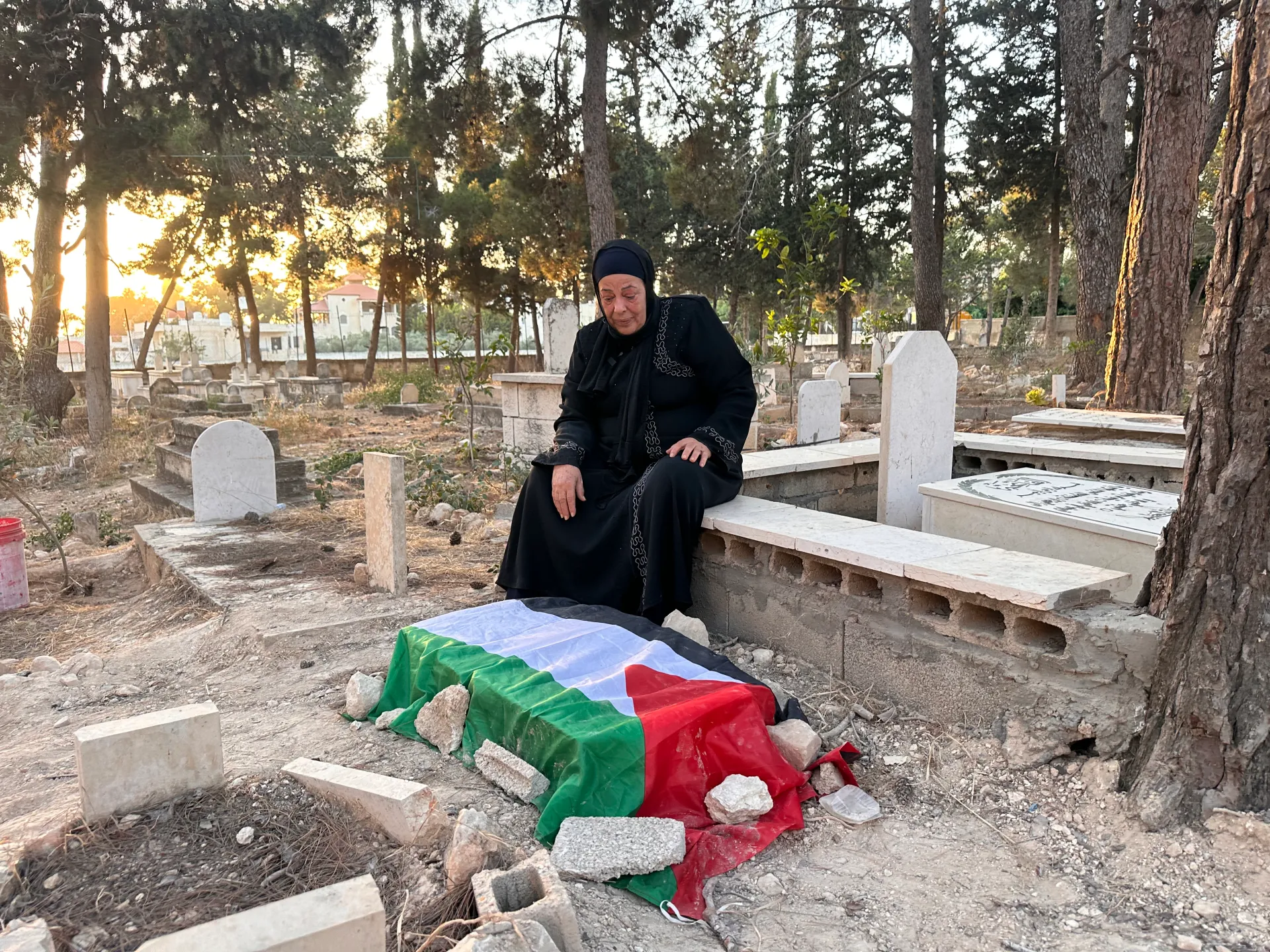
Even after Ahmad's death, the family reportedly faced continued restrictions. Israeli military authorities contacted them with specific instructions for the funeral, including prohibitions on political slogans, martyr posters, and public displays, with warnings of consequences for non-compliance. The only flag present at the funeral was draped over Ahmad's coffin.
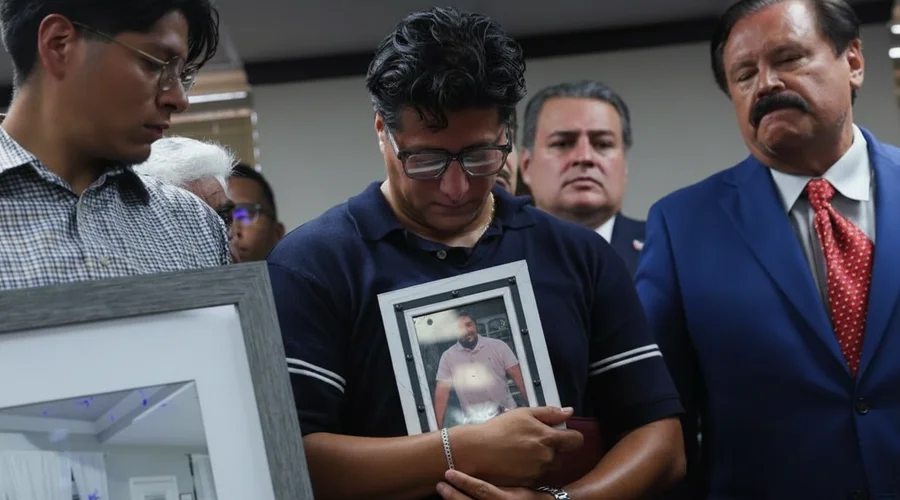
Ahmad was the only son of Maarouf and Yasmine, born after three daughters and years of trying for a boy, including three rounds of unsuccessful fertility treatment for Yasmine. The profound grief of the parents was palpable, with Maarouf reportedly refusing food and water since his son's death, struggling to accept the loss. His aunt, Senyora Zaid, conveyed his distress from Ahmad's graveside, saying, "He tells me: I want to go get my son. I want to bring him back from the grave."
Source: Original Article