
India's Expanding Role in Asia Pacific
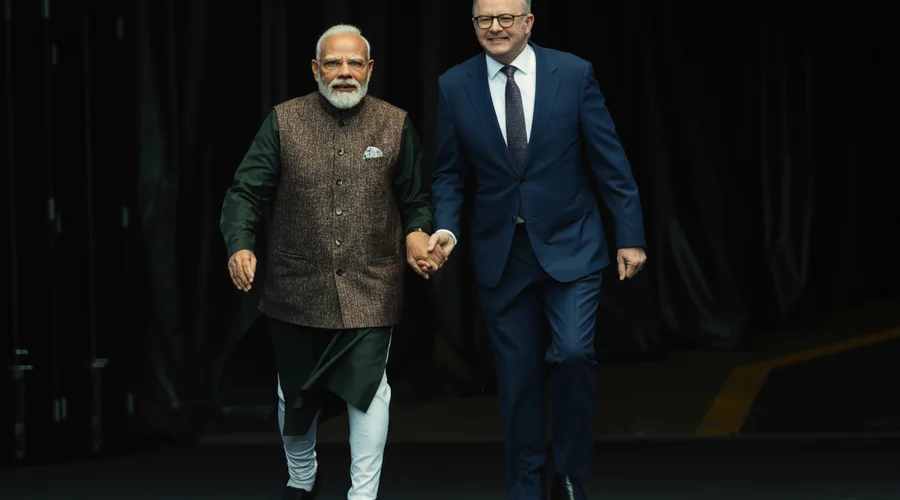
Prime Minister Narendra Modi's recent visits to Indonesia, Australia, and New Zealand underscore India's growing strategic influence in the Asia Pacific region. This series of visits reflects a broader strategy aimed at reinforcing India's position amidst shifting global dynamics.
Historical Context of India-Australia Relations
In 1998, following India's nuclear tests at Pokhran, Australia suspended defense collaboration with India, resulting in a significant diplomatic rift. However, Modi's latest visit marks a notable transformation in the bilateral relationship, with Australia now inviting an Indian military instructor to the Australian Defence College. This evolution from sanctions to strategic partnership underscores one of the most significant diplomatic changes in recent history.
Significance of Modi's Three-Nation Tour
Modi's itinerary, which included Indonesia, Australia, and New Zealand, highlights India's expanding strategic interests across the Asia Pacific region. Indonesia serves as a crucial gateway to Southeast Asia, while Australia has emerged as a key partner for India. New Zealand, though smaller, extends India's diplomatic reach into the Pacific. Collectively, these visits reflect India's approach to shaping the region's power dynamics.
Regional Context and Challenges
The geopolitical landscape in the Asia Pacific is marked by China's rise and the United States' unpredictable foreign policy under former President Donald Trump. This environment has prompted countries like India, Japan, Indonesia, Australia, and New Zealand to navigate their paths carefully to avoid being caught between Chinese dominance and a potential new Cold War.
Strengthening India-Australia Ties
India and Australia share numerous commonalities, including democratic values and strategic interests in maintaining regional balance. The agreements reached during Modi's visit, such as the operationalization of uranium exports for civilian nuclear energy and expanded defense cooperation, are pivotal steps in strengthening bilateral ties.
Previously, Australia was hesitant to sell uranium to India due to India's non-signature of the Nuclear Non-Proliferation Treaty. However, recent developments have facilitated the advancement of India's civil nuclear energy program, symbolizing a shift from estrangement to partnership.
India's Strategic Autonomy
India's approach to regional dynamics is not solely about countering China. Rather, it seeks a balanced strategy that includes competition, cooperation, and stabilization with Beijing. This approach is guided by India's long-standing principles of strategic autonomy, which emphasize self-reliance in foreign policy decisions.
The Importance of Middle Powers
In the evolving Asia Pacific landscape, middle powers like Japan, Indonesia, and Australia play crucial roles. While they cannot dictate global terms, they can help maintain stability and counterbalance any hegemonic ambitions. India, while not a traditional middle power, values these alliances to ensure a multipolar and rules-based regional order.
Looking Ahead
India's vision for the Asia Pacific is not one dominated by any single power. Instead, it advocates for an open, multipolar region where rules and cooperation prevail. Modi's tour of the region signifies India's commitment to shaping this vision, asserting its role as a major influencer rather than a passive participant.
Source: Original Article
Related Articles
 world
world
Iranian Provinces Report Strikes Amid US Denial of Involvement
 world
world
Ukraine to Accelerate Patriot Missile Production Following US Approval
 world
world
US Strategy on Iran: A Complex Web of Pressures
 world
world