
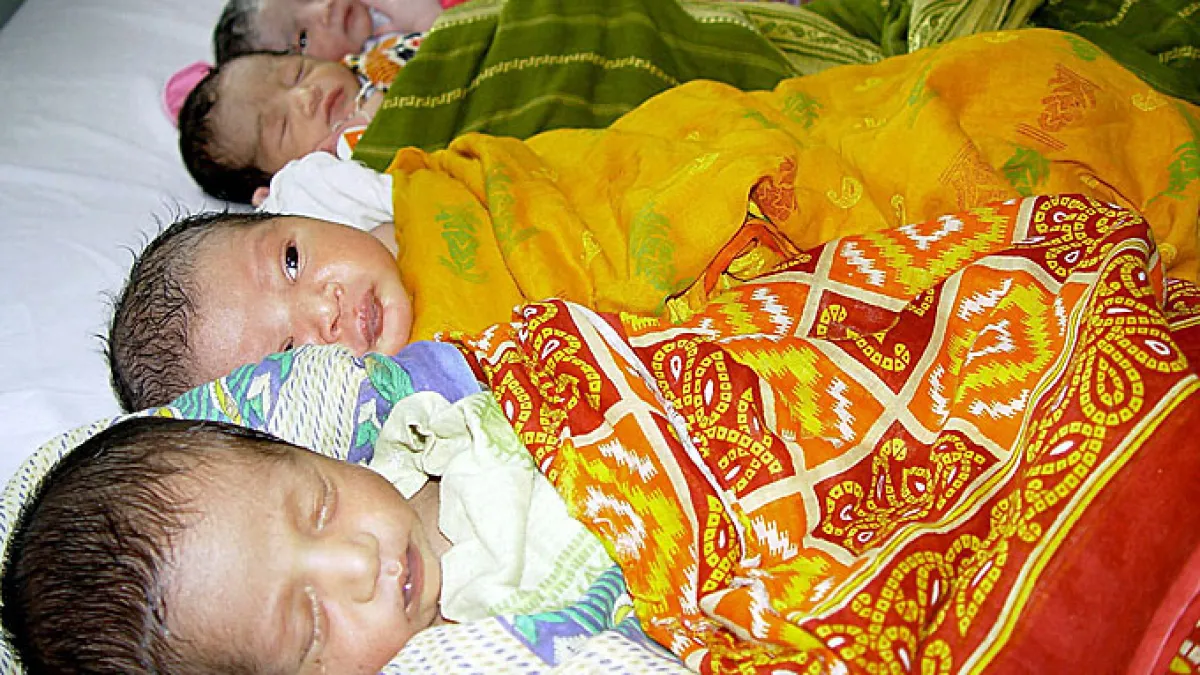
India's Fertility Rate Drops Below Replacement Level
India, a nation long associated with rapid population growth, is now navigating a significant demographic transition. Recent government data indicates that the country's total fertility rate (TFR) has declined to 1.9 children per woman. This figure is notably below the 2.1 benchmark typically required to maintain a stable population, signaling a profound shift in reproductive trends across the subcontinent. This change contrasts sharply with the TFR of approximately 3.3 births per woman recorded in the early 2000s, highlighting a rapid evolution in family planning and lifestyle choices among Indian citizens.
The latest Sample Registration System (SRS) Statistical Report, compiled by India's Office of the Registrar General and Census Commissioner, underscores this trend. The report, which serves as the country's most comprehensive demographic survey, confirms a sustained decline in birth rates over several years, culminating in the current TFR below the replacement level. This development is attributed to a confluence of factors, ranging from enhanced educational opportunities and greater access to contraceptives to the escalating financial burden of raising children in contemporary India.
Career Aspirations and Evolving Social Norms
For many young Indians, personal and professional aspirations are increasingly taking precedence over traditional family structures. Nidhi Agarwal, a 41-year-old entrepreneur in Bengaluru, exemplifies this shift. She and her husband made a conscious decision not to have children, prioritizing their careers and their goal of creating a broader societal impact through their businesses. This choice, while met with some familial pressure, reflects a growing sentiment among educated couples to pursue larger life goals that extend beyond parenthood.
Dr. Jyotsna Mirlay, a consultant gynaecologist in Bengaluru, observes that higher education levels and the influence of globalization are empowering young women to challenge conventional expectations about marriage and motherhood. The traditional narrative that life is only complete with marriage and children is losing its hold. Women in the 30-40 age bracket, armed with education and financial independence, are making deliberate choices about if and when to have children, often aligning these decisions with their career trajectories. Dr. Mirlay notes that many couples consult her not just about conception, but also about the implications of parenthood on their professional lives, questioning whether children will truly enhance their lives or merely serve as a societal obligation.
Shweta Luthra, a 41-year-old human rights lawyer, offers another perspective. Marrying at 23, she initially prioritized her career, further studies, and global travel. While her partner desired children sooner, financial constraints made early parenthood seem impractical. Her eventual pregnancy, while unplanned, led her to embrace motherhood, albeit earlier than anticipated. Luthra highlights a 'sweet spot' for career-focused individuals: either having children early to then dedicate time to professional growth, or delaying parenthood until achieving leadership positions with the flexibility to manage work and family responsibilities.
The advent of egg freezing technology has also provided a significant option for women who wish to defer motherhood. India's more than 2,000 fertility centers offer this service, allowing women to preserve their fertility while focusing on career milestones or waiting for a suitable partner. This increased accessibility to reproductive choices is empowering women to control their biological timelines, reducing the pressure to rush into childbearing.
Economic Realities and the Cost of Living
Beyond career considerations, the rising cost of living in India is a critical factor influencing family planning decisions. The country has been experiencing sustained inflation, with consumer price inflation consistently rising. With an average annual income significantly lower than the estimated monthly cost of living (excluding rent), many individuals find it challenging to envision raising a family.
Roopa, a 36-year-old team leader, exemplifies this concern. Having grown up witnessing her single mother's struggles to raise her and her brother, Roopa is determined to achieve financial security before considering children. She articulates a common desire among young Indians: to provide their children with a high quality of life, including excellent education and future opportunities. The financial implications of these aspirations lead many to carefully consider their economic stability and career goals before expanding their families. Some young people, in fact, are choosing to forgo parenthood altogether, opting instead to invest their resources in improving their own lifestyles through travel, dining, and other leisure activities.
Improved Healthcare and Informed Choices
Another significant factor contributing to the declining birth rate is the substantial reduction in infant mortality. India has seen a decrease in infant deaths from 30 per 1,000 live births in 2019 to 24 per 1,000 live births in 2024. Historically, a decline in infant mortality often correlates with a reduced impetus for couples to have more children, a pattern now evident in India.
This trend is particularly pronounced in regions with better healthcare and education systems. States like New Delhi, Tamil Nadu, and Kerala, which boast high educational attainment and low infant mortality rates, also record the lowest fertility rates (1.2 and 1.3 respectively). Conversely, poorer states like Bihar and Uttar Pradesh, characterized by lower education levels and higher infant mortality, exhibit higher fertility rates (2.9 and 2.6). Dr. Mirlay attributes the improved infant mortality rates to government initiatives in ensuring safe births, widespread immunization, and accessible healthcare, which are indirectly contributing to smaller family sizes.
Furthermore, access to contraception has become significantly easier, even in smaller cities and rural areas. The availability of oral contraceptive pills at chemists and primary health centers empowers women to make informed decisions about family size. The evolving support systems for child-rearing also play a role; while traditional extended families often provided childcare, older parents may rely on nannies or daycares, which can be expensive.
Corporate support for working parents also influences decisions. While India offers paid maternity leave, paternity leave in the private sector is not federally mandated, creating challenges for dual-income households. This lack of robust parental support can deter couples from having children. Concurrently, infertility rates are rising in India, often linked to lifestyle factors such as poor metabolic health, obesity, and hormonal imbalances. Despite the proliferation of infertility clinics, the high cost of treatments can be a deterrent for many couples.
The multifaceted decline in India's birth rate underscores a complex interplay of economic pressures, shifting societal values, enhanced educational opportunities, improved healthcare, and greater individual agency in reproductive choices. This demographic transformation is reshaping the future of the nation, driven by the informed decisions of its citizens.
Source: Al Jazeera
Related Articles
 news
news
Vietnamese Authorities Dismantle Major Cat Theft Ring, Rescuing Hundreds of Felines
 news
news
Controversial Property Fair in London Sparks Debate Over Israeli Settlements
 news
news
UK Prime Minister Condemns 'Reckless' Russian Warning Shots in English Channel
 news
news