
Oil Market Reacts to Geopolitical Shifts
Global oil prices are currently experiencing a notable decline, reflecting growing optimism for a return to stability in international energy markets. This shift in sentiment precedes the expected signing of a framework agreement aimed at resolving the United States-Israel conflict with Iran. This development has led to a significant easing of market anxieties that had previously driven prices upward.
Futures for Brent crude, designated for August delivery, saw a nearly one percent drop on Wednesday, extending a trend of approximately five percent declines over each of the preceding two days. The international benchmark reached $78.24 per barrel as of 08:00 GMT, marking its lowest value since March 3. This date was just three days after the commencement of the conflict, which had initially caused crude prices to surge by over 50 percent. Despite the earlier escalation, the current price on Wednesday afternoon in Asia was only about seven percent higher than before the US and Israel initiated attacks on Iran on February 28.
Market Confidence and Analyst Perspectives
Tamas Varga, an analyst at PVM Oil Associates in London, provided commentary on the situation, stating, "The immediate prognosis, it seems, is optimistic and assumes no significant setbacks." Varga highlighted the substantial price correction, noting, "Over the last four trading sessions, Brent, for example, has fallen by $17 [per barrel], a discernible vote of confidence that the worst, at least as far as supply disruptions are concerned, is behind us." This suggests a market belief that the most severe supply chain challenges are now in the past.
Vandana Hari, founder of Vanda Insights, an oil market analysis provider based in Singapore, acknowledged the relief brought to markets by the announcement of the Memorandum of Understanding (MoU) between the US and Iran. However, she cautioned that "the hardest part, on delivering the pledges and promises, is yet to come." Hari emphasized the sentiment-driven nature of the current market movement, explaining, "Crude’s slide is entirely sentiment-driven. The market is front-running the prospective reopening of the Strait of Hormuz and likely pricing in the best-case scenario for the normalisation of flows, which means the potential hiccups from logistics to renewed geopolitical tensions are not being adequately factored in." This indicates a potential over-optimism that might overlook future challenges.
The Significance of the Strait of Hormuz
While specific details of the MoU, scheduled for signing on Friday, remain largely undisclosed, expectations are high that Iran will reverse its near-total closure of the Strait of Hormuz. In return, the US is anticipated to lift its blockade on Iranian ports, among other concessions. The complete reopening of this vital waterway would represent a crucial step towards restoring confidence in global energy supply chains, which have endured nearly four months of disruption due to the conflict.
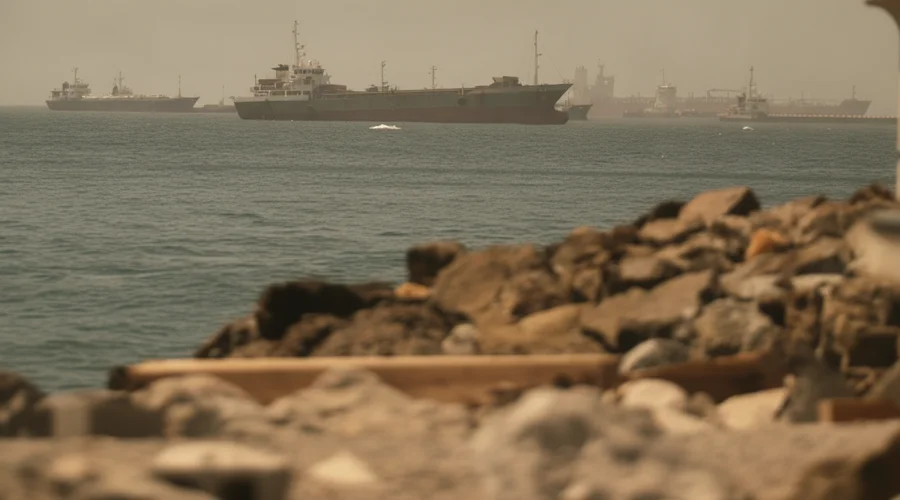
The Strait of Hormuz, situated between Iran and Oman, has seen maritime traffic drastically reduced to a mere trickle. This reduction was primarily due to the persistent threat posed by Iranian missiles, drones, and mines, which significantly curtailed global oil supply by an estimated 14 million barrels each day. The potential for its full restoration to normal operations is a major factor influencing current market sentiment.
Challenges to Full Recovery
Even with the prospective end of the conflict, a full recovery of global energy flows is expected to take several months. Estimates suggest that more than 500 vessels are currently awaiting passage to exit the Gulf via the Strait. Furthermore, the critical process of clearing the channel of naval mines is projected to take a minimum of several weeks. These logistical hurdles highlight that a return to pre-conflict normalcy will not be immediate.
Stephen Cotton, the general-secretary of the International Transport Workers’ Federation, underscored these challenges. He stated that the signing ceremony, planned for Geneva, Switzerland, would be "at best the beginning" of a protracted normalization process. Cotton elaborated in a statement on Monday, "The backlog of stranded vessels and the need for crew changes and rest mean a realistic return to normal shipping patterns is weeks, if not months, away." This perspective suggests that while the geopolitical tensions may be easing, the practical implications for shipping and supply chains will require considerable time to resolve.
Source: Original Article
Related Articles
 economy
US Fuel Prices Not Expected to Decline Significantly Until 2027, Analysts Suggest
 economy
Examining the Recent Decline in Gold Prices Amidst Global Tensions
 economy
Elon Musk's Financial Ascension: A Historical Perspective on Wealth and Influence
 economy