
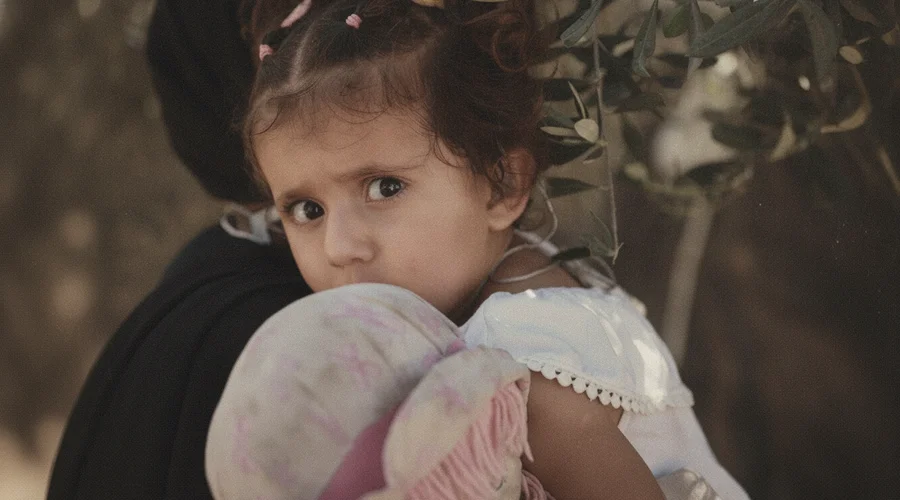
The Silent Epidemic Among Gaza's Youth
In the embattled Gaza Strip, a silent crisis is unfolding, profoundly impacting its youngest residents. Children are increasingly developing significant hearing impairments, often severe or profound, as a direct consequence of sustained exposure to explosive blasts. This tragic phenomenon is compounded by a severely debilitated healthcare infrastructure and stringent restrictions on the entry of crucial medical supplies, leaving many without hope for effective treatment.
The story of Wateen al-Ajrami, a toddler just over a year old, highlights the devastating reality faced by countless families. In August of last year, while sheltering in a storage room in northern Gaza’s Jabalia, an Israeli strike occurred nearby. Her mother, Mariam, recounted the terrifying moment Wateen, standing near a door, covered her ears and screamed, though she sustained no visible physical injuries. Days later, however, Mariam noticed a distressing change: Wateen no longer responded when called. A subsequent hearing test confirmed their fears: Wateen had lost approximately 85 percent of her hearing in her left ear and 90 percent in her right, categorizing her condition as severe to profound hearing loss.
Mariam described the diagnosis as an "extremely shocking moment," particularly as Wateen was just beginning to utter her first words. Doctors attributed the damage to the blast wave from the explosion, noting that Wateen’s case was not an isolated incident in the ongoing conflict. Since then, the family has been locked in a relentless pursuit of medical intervention, including further examinations and an MRI. Medical reports have been submitted to the World Health Organization, hoping for a referral for treatment outside Gaza, but the wait persists, marked by profound anxiety.
A Perilous Environment and Collapsing Healthcare
United Nations agencies and various health organizations have reported a substantial increase in children in Gaza suffering from partial or total hearing loss. Blast waves are recognized as a primary cause of inner ear injuries, often accompanied by brain trauma and severe psychological shock. Before the current conflict, an estimated 20,000 people in Gaza lived with hearing disabilities. However, field workers now estimate this number has surged to between 30,000 and 40,000, with a significant proportion being children.
The challenges facing these individuals are immense. Gaza's healthcare system has largely collapsed, and many rehabilitation centers have been damaged or rendered inoperable. Access to critical medical devices such as cochlear implants and hearing aids is severely restricted. Organizations supporting the deaf and hard of hearing report acute shortages of these devices, along with necessary batteries and spare parts, primarily due to ongoing import limitations.
Furthermore, the destruction or closure of rehabilitation centers that once offered speech therapy, psychological support, and educational services poses a significant threat to children's language development during crucial formative years. International humanitarian law and UN agencies underscore that children with disabilities, especially those with hearing loss, face heightened risks in conflict zones. The ability to hear warnings—such as approaching aircraft, explosions, or evacuation calls—is often vital for survival. Without this natural alert system, children become more vulnerable, unable to detect danger or react in time.
This vulnerability is vividly illustrated by the experience of Usaid al-Shami, a three-year-old boy who lost most of his hearing at around four months old during an intense phase of the conflict in southern Gaza. His mother, Mariam, lives in constant fear for his safety. She recounted an incident where Usaid was attacked by dogs because he could not hear their barking, while other children fled. On another occasion, he narrowly avoided road accidents due to his inability to hear approaching vehicles. Mariam describes her life as an ongoing struggle, feeling as though she is "inside another war within the war."
The Urgency of Early Intervention
Fadel Kuraz, a sign language interpreter and disability rights activist with the Atfaluna Society for Deaf Children in Gaza, emphasizes the dramatic escalation of this crisis. He estimates that the number of individuals with hearing loss or disabilities has risen from approximately 20,000 before the war to around 35,000. Kuraz stresses that without essential hearing devices, including medical hearing aids, batteries, maintenance tools, and cochlear implant equipment, these individuals are unable to integrate into society or communicate effectively.
The Israeli blockade on Gaza remains a significant impediment, preventing the entry of crucial medical supplies. Kuraz explains that current policies restrict the import of assistive devices, cochlear implants, and spare parts, exacerbating an already dire situation. Many diagnostic and rehabilitation centers have been destroyed or are non-operational, severely limiting the capacity to follow up on new cases, particularly among children who require early intervention.
"We are facing a real catastrophe," Kuraz stated, highlighting the scarcity of even basic necessities like hearing aid batteries. He warns that if the situation persists, an entire generation of children risks losing the ability to acquire language and communicate naturally, primarily due to the lack of cochlear implantation and early intervention programs.
Wateen al-Ajrami currently attends speech and auditory rehabilitation sessions at Hamad Hospital in Gaza, where specialists endeavor to train her to respond to sounds and develop communication skills. She has received two hearing aids, which offer a slight improvement in her response to certain sounds. However, doctors maintain that hearing aids are not a definitive solution. Both Wateen and Usaid require cochlear implant surgery, which is exclusively available outside Gaza.
The challenge is further compounded by Israel's restrictions on the travel of Palestinians from Gaza, including those seeking medical treatment. For children suffering from hearing loss, time is a critical factor; doctors recommend cochlear implant surgery before the age of five for optimal effectiveness. Mariam, Wateen's mother, lives with constant anxiety, knowing that delays could severely impact her daughter's language and speech development during these crucial early years.
"I think about her day and night," Mariam expressed, her voice heavy with exhaustion and fear. "It's not just about today… I keep thinking about the future. How will she hear? How will she learn? How will she speak?" At home, the family provides special care, but Mariam observes Wateen watching other children interact, feeling a profound barrier separating her from their world. Sometimes Wateen cries or becomes upset, unable to articulate her needs. Mariam's sole wish, expressed with profound emotion, is simply for her daughter to receive the cochlear implant she desperately needs.
Source: Gaza children running out of time to treat blast-induced hearing loss
Related Articles
 news
news
Vietnamese Authorities Dismantle Major Cat Theft Ring, Rescuing Hundreds of Felines
 news
news
Controversial Property Fair in London Sparks Debate Over Israeli Settlements
 news
news
UK Prime Minister Condemns 'Reckless' Russian Warning Shots in English Channel
 news
news