
A New Era for Football's Premier Event
The FIFA World Cup 2026, co-hosted across the United States, Mexico, and Canada, is anticipated to be the largest iteration of the tournament to date. With an expanded number of participating teams and a 39-day schedule, the event aims to elevate the global football spectacle. A significant aspect of this evolution will be the extensive incorporation of technology, particularly artificial intelligence (AI), to refine various facets of the game and its presentation.
Sensor-Equipped Match Balls: The 'Trionda'
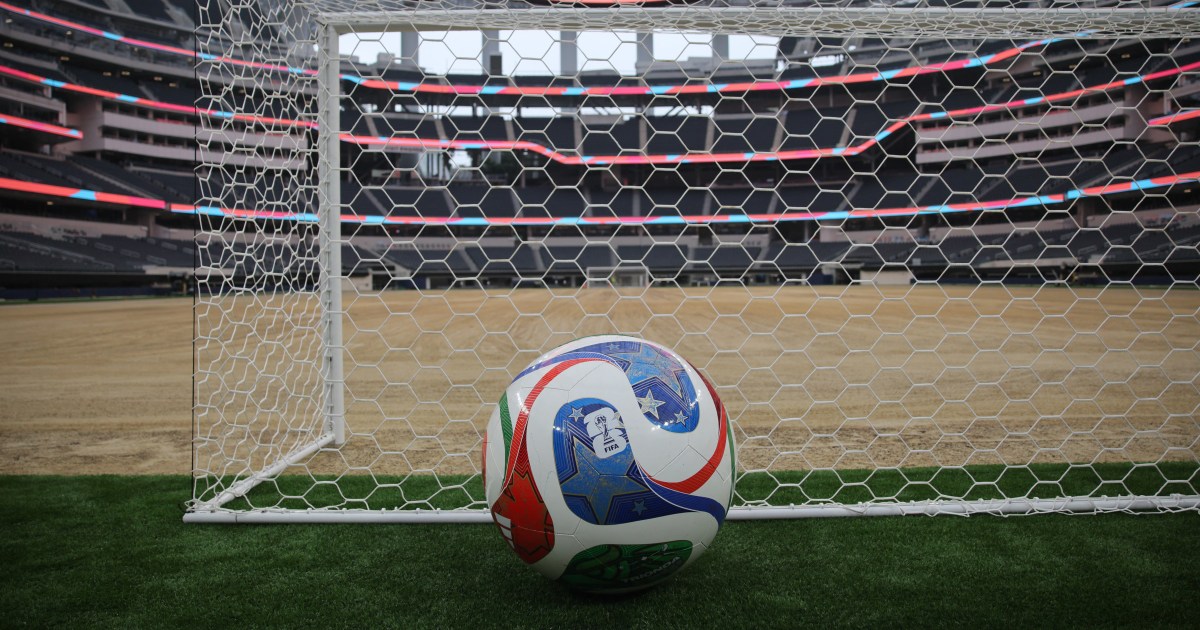
The official match ball for the 2026 World Cup, named 'Trionda' (Spanish for 'three waves'), is more than just a piece of equipment. Manufactured by Adidas, it features an integrated inertial measurement unit (IMU) sensor chip. This sensor captures data on the ball's movement 500 times per second, tracking its acceleration and precise three-dimensional movements. This real-time data is transmitted to the video assistant referee (VAR) system, offering match officials enhanced support for decision-making, especially concerning offside calls.
AI-Powered 3D Player Avatars
Technological integration extends beyond the match ball to the players themselves. Through a collaboration between FIFA and Lenovo, AI-driven innovations will include the creation of 3D player avatars. Players will undergo rapid digital scanning to generate highly accurate 3D models. These models are designed to reliably track player movements, even during fast-paced or obstructed scenarios. This advancement is expected to significantly improve semi-automated offside technology and will also be incorporated into broadcast visuals, providing a more immersive and realistic display of offside decisions for fans in stadiums and viewers worldwide. Additionally, referee body cameras, already trialed in various leagues, will be deployed across all 104 matches, offering a unique, on-pitch perspective for audiences.
Robotic Assistance for Security
In a notable security measure, Mexican host cities, such as Guadalupe in the Monterrey metropolitan area, plan to deploy robotic dogs to assist in crime prevention. These four-legged robots are designed to access hazardous environments and transmit live video feeds to security personnel, enabling informed decision-making before direct intervention. Acquired for approximately 2.5 million pesos ($145,000), these animaloid robots will support police officers by providing initial reconnaissance and enhancing officer safety during potential altercations.
Advanced Semi-Automated Offside Technology
Building on previous iterations, the 2026 World Cup will feature an advanced semi-automated offside technology. This system aims to provide quicker and more accurate offside decisions. While earlier versions would only alert officials for offsides exceeding 50cm, the revamped technology can now signal when a player is more than 10cm offside, ensuring greater precision. Officials will receive real-time audio alerts directly to their earpieces, streamlining the decision process. However, the technology has limitations; it primarily addresses positional offsides and cannot interpret subjective calls, such as player interference, or resolve situations where players are on the ground or in extremely close proximity. Despite these constraints, FIFA anticipates that this advancement will reduce frustrations for both players and viewers by minimizing delayed offside calls and potentially lowering the risk of injuries during needless passages of play.
Mandatory Hydration Breaks
Prioritizing player welfare, FIFA will introduce fixed three-minute hydration breaks in each half of every match, irrespective of weather conditions or venue. These breaks will occur around the 22nd minute mark of each half, from whistle to whistle. Manolo Zubiria, Chief Tournament Officer, USA, for the FIFA World Cup 2026, confirmed that these breaks will be a standard feature, with adjustments made for any ongoing injury stoppages at the designated times. Similar hydration breaks were implemented during the 2025 FIFA Club World Cup, also held in the US, to help players cope with high temperatures.
Source: Al Jazeera
Related Articles
 sport
sport
Cobolli Advances to French Open Final After Arnaldi's Viral Withdrawal
 sport
sport
Iranian Football Team Secures US Visas for World Cup Amid Geopolitical Tensions
 sport
sport
Cristiano Ronaldo Prepares for Historic Sixth World Cup with Portugal Squad
 sport
sport