
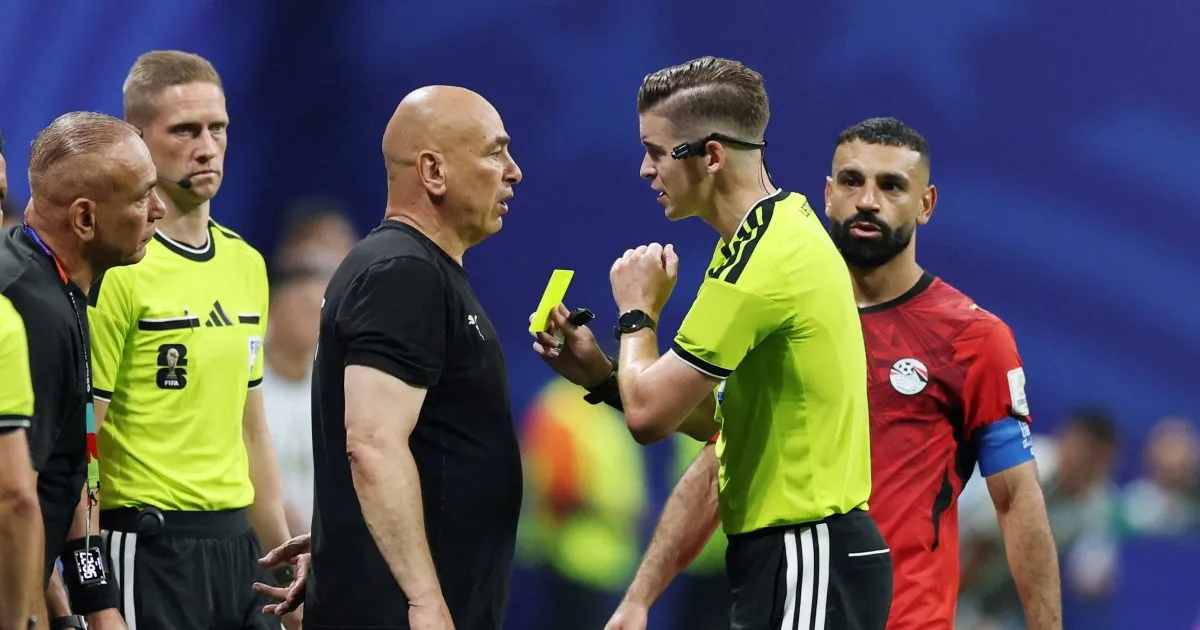
FIFA Official Addresses Refereeing Integrity
Pierluigi Collina, the head of FIFA's refereeing committee, has publicly refuted allegations of bias concerning the officiating during the 2026 World Cup round of 16 encounter between Argentina and Egypt. Collina's comments, published on FIFA's official website, underscored the autonomy of match officials and warned against the potential for such claims to incite threats against referees and their families.
The match, which saw Argentina secure a dramatic 3-2 victory over Egypt, drew considerable scrutiny from the Egyptian side, who voiced strong objections to several refereeing decisions. Despite acknowledging that criticism is an inherent part of football, Collina condemned any questioning of officials' integrity, particularly in the wake of Egypt's defeat.
Defense of Officials' Conduct
Collina stated, "With such a high number of matches played in a relatively short period of time, it is normal that some things do not go as expected. When that happens, they [referees] are ready to work even harder to ensure they are fully prepared for the next match." He further elaborated that while constructive discourse regarding decisions is acceptable, "unfounded allegations have no place in our sport."
He vehemently denied any possibility of external influence on FIFA's refereeing, asserting, "Nobody can question the integrity of the FIFA World Cup match officials… Equally, nobody can claim that FIFA refereeing can be influenced by anyone, not even by the FIFA president [Gianni Infantino]." Collina stressed that officials make honest judgments and, similar to players and coaches, consistently strive for optimal performance.
Egypt's Grievances and Key Incidents
Egypt's exit from the tournament was followed by strong claims of unfair treatment. Coach Hossam Hassan suggested that pressure might have been exerted on the referee to ensure Argentina's progression, alleging that Egypt was "cheated" out of a quarter-final spot. The Egyptian Football Association echoed these sentiments, expressing discontent with what they described as the improper application of the Video Assistant Referee (VAR) system.
A primary point of contention for Egypt was the disallowing of Mostafa Zico's second-half goal. They argued that the foul cited in the build-up was non-existent. Additionally, Egypt protested a challenge on Mohamed Salah that went unpenalized moments before Argentina initiated the play that led to their winning goal.
VAR Decisions Explained
Collina provided detailed explanations for the controversial VAR decisions. Regarding Zico's disallowed goal, he confirmed that VAR correctly recommended overturning the goal due to a foul committed by Marwan Attia on Argentina defender Lisandro Martinez during the attacking phase. Collina clarified, "We believe that a foul is a foul. Regardless of whether the foul appears 'obvious', if the referee did not see it on the field of play, the VAR can intervene."
Concerning the incident involving Mohamed Salah prior to Argentina's decisive goal, Collina defended the decision not to award a penalty. Both the on-field referee and the VAR concluded that the contact between Salah and Julian Alvarez constituted "normal football contact." He differentiated, "Stepping on an opponent’s foot is a foul, whereas a defender who touches the ball first and then makes normal football contact has not committed a foul."
While acknowledging that an element of subjectivity is inherent in certain decisions, Collina conveyed FIFA's satisfaction with the overall implementation of VAR principles throughout the tournament. The organization maintains that the system has been applied consistently and fairly, despite the differing perspectives from participating teams.
Source: Original Article
Related Articles
 sports
Examining Trust in Referees and VAR at the World Cup
 sports
France and Morocco Set for Quarterfinal Showdown at 2026 World Cup
 sports
Historic Women's Test Match to Debut at Lord's as England Hosts India
 sports