
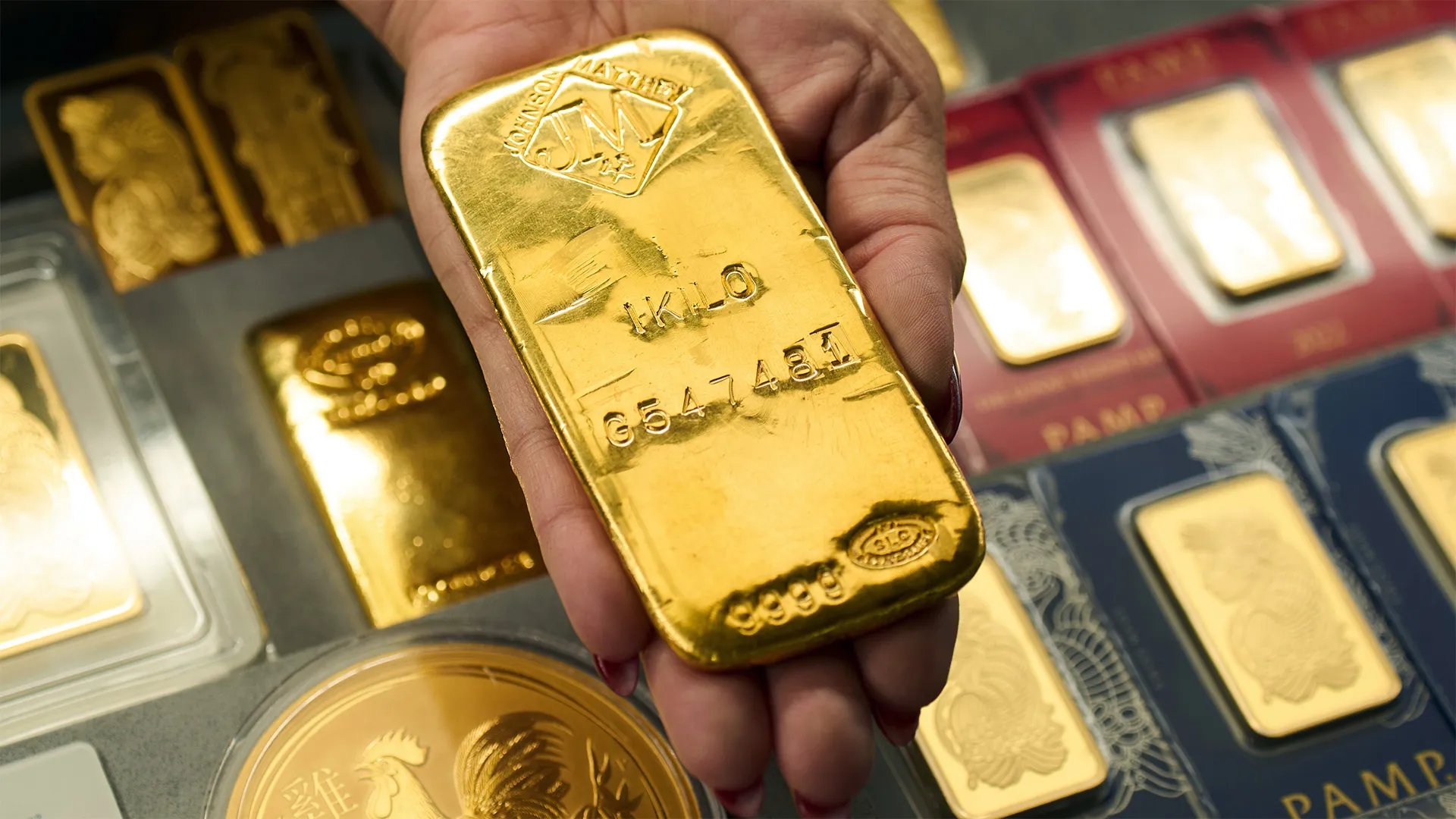
Gold's Unconventional Reaction to Geopolitical Unrest
Traditionally, periods of international instability and economic uncertainty have seen a surge in gold's value, as investors often regard the yellow metal as a reliable safe haven against inflation. However, the current global landscape presents a notable deviation from this pattern. Despite a prolonged conflict involving the United States, Israel, and Iran, which commenced in late February, gold prices have experienced a consistent downward trend rather than an anticipated ascent.
Since the onset of the conflict, gold has been under considerable pressure. Its price per troy ounce, which stood at a peak of $5,303 on January 28, has since fallen to approximately $4,235. This decline is largely attributed to a confluence of economic factors, most prominently soaring inflation and the subsequent market expectations regarding central bank monetary policy.
The Inflation-Interest Rate Dynamic
A primary driver behind gold's recent performance is the pervasive concern that central banks will not only refrain from cutting interest rates but may even opt to increase them further to combat persistent inflation. The origins of this inflationary spike are significantly linked to disruptions in the Strait of Hormuz. In response to the conflict, Iran has reportedly impeded maritime traffic through this crucial waterway, a vital conduit for global oil and gas shipments. This blockade has led to a sharp increase in energy prices, which in turn has exacerbated inflationary pressures worldwide.
In the United States, inflation has reached its highest level in three years, registering at 4.2 percent. Concurrently, the U.S. job market has demonstrated unexpected resilience, diminishing expectations for any immediate reductions in interest rates by the Federal Reserve. While gold is widely considered an inflation hedge, higher interest rates typically exert downward pressure on its price. This is because gold is a 'non-yielding' asset, meaning it does not generate income or dividends. Its profitability for investors depends solely on its appreciation in market value. In contrast, higher interest rates make other investments, such as bonds or interest-bearing accounts, more attractive by offering a guaranteed return.
"Gold is as close to real money as is possible in terms of an asset," explained Justin Cardwell, head options analyst for OptionSpreaders.com. "It doesn't collect dividends, but it also doesn't yield value till prices go up. People buy gold for its appreciation [in value]."
This dynamic places gold in direct competition with interest-bearing assets. As Cardwell further noted, "Gold loses its shininess as an investment if interest rates are high and people are going to pound into the dollar."
The Strengthening U.S. Dollar
Another critical factor influencing gold's price is the strength of the U.S. dollar. The ongoing conflict has paradoxically bolstered the dollar's value. Given that gold is primarily priced in dollars, the two assets typically exhibit an inverse relationship. A stronger dollar makes gold more expensive for holders of other currencies, thereby dampening demand. "When the dollar strengthens, gold feels the pressure; when the dollar weakens, gold tends to climb. Right now, the dollar is strong, and gold is feeling it," stated Collin Plume, CEO of Noble Gold Investments.
However, Plume also cautioned that the future trajectory for both the dollar and gold remains uncertain. He highlighted the prevailing market sentiment that has shifted from anticipating rate cuts to facing the potential of further rate increases. "Any asset is affected by that shift, and gold is especially price-sensitive to interest rates," he added.
Federal Reserve Policy and Future Outlook
Prior to the recent conflict, there was considerable political pressure for the Federal Reserve to reduce interest rates. However, current market indicators, such as the CME FedWatch tool, now suggest a greater than 50 percent probability of a rate hike by December. This potential shift in monetary policy is expected to significantly impact gold's value.
Plume analogized the situation: "Interest rates and inflation as two sides of a seesaw… and gold sits right in the middle of that. The catch in 2026 is that both are happening at once — and right now, the rate side is winning. That’s why gold is facing headwinds."
Despite the prevailing downward trend, recent developments have offered a glimmer of potential change. News of a possible deal between the U.S. and Iran led to a slight uptick in gold prices on Friday. This reaction suggests that any de-escalation of the conflict, which could alleviate inflationary pressures by stabilizing energy markets, might be positive for gold.
Nonetheless, experts like Cardwell believe that while a resolution to the conflict could offer some relief, the full impact on inflation and subsequently on gold prices would unfold over several months. He concluded that gold is likely to find support within its current range, but numerous other factors will continue to cap its upward potential even after the war concludes.
Related Articles
 economy
US Fuel Prices Not Expected to Decline Significantly Until 2027, Analysts Suggest
 economy
Global Oil Prices Decline Amid Hopes for Strait of Hormuz Reopening and Peace Deal
 economy
Elon Musk's Financial Ascension: A Historical Perspective on Wealth and Influence
 economy