
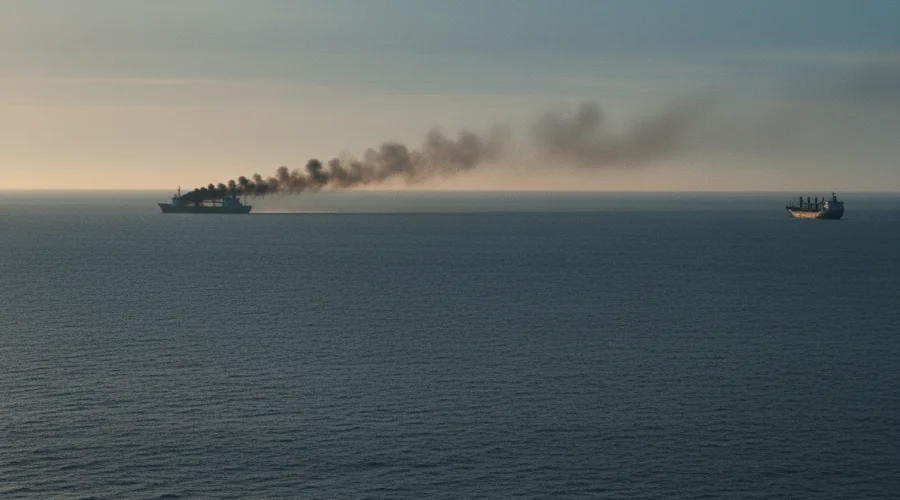
Renewed Conflict in the Black Sea
The ongoing conflict between Russia and Ukraine has seen a significant escalation in the Black Sea area, impacting both civilian and military infrastructure. Recent reports indicate that Russian forces have conducted strikes on port facilities in the Odesa region, leading to casualties, while Ukraine has asserted its targeting of Russian maritime assets.
According to Oleh Kiper, the Governor of the Odesa region, the area has endured a continuous, extensive drone and missile assault for five consecutive days. These attacks have reportedly targeted various facilities, including civilian, industrial, and port infrastructure. Serhiy Lysak, Odesa's military administrator, confirmed that these strikes resulted in the deaths of at least three individuals and left three others injured.
In response to these developments, Russia's Ministry of Defence acknowledged its strikes on the ports of Odesa and Chernomorsk. The ministry stated that these operations were aimed at infrastructure facilities that it alleges are utilized for fuel storage and the assembly of drones. This comes as Russia has intensified its attacks on Ukraine's Black Sea ports, which are crucial for the country's grain exports and overall economy.
Ukraine's Maritime Counter-Operations
Concurrently, Ukraine has intensified its efforts to disrupt Russian logistical operations in southern Ukraine and to isolate Crimea, a territory annexed by Russia in 2014. Robert Brovdi, Ukraine's drone force commander, claimed that Ukrainian forces have successfully struck 17 Russian oil tankers, two gas tankers, and one tugboat in the Black Sea. He further asserted that a total of 116 Russian vessels had been 'hunted down' over a nine-day period earlier in the week.
These actions by Ukraine follow previous reports from Moscow on Tuesday, indicating preparations to re-route exports due to a series of attacks on Russian shipping in the Sea of Azov. Russian Foreign Minister Sergey Lavrov characterized Ukraine's attacks on shipping as 'terrorism,' highlighting the escalating rhetoric surrounding maritime operations in the region.
International Reactions and Defence Integration
The increased hostilities coincide with diplomatic efforts aimed at bolstering Ukraine's defence capabilities. European Commission President Ursula von der Leyen recently visited Kyiv, where she announced plans to deepen defence integration between Ukraine and the European Union. Her statement, shared on X (formerly Twitter), emphasized initiatives to enhance defence industries to facilitate increased and faster production.
The strategic importance of the Black Sea and its ports for both nations cannot be overstated. For Ukraine, these ports are vital arteries for its economy, particularly for agricultural exports. For Russia, maintaining control and disrupting Ukrainian access to these routes are key objectives in the broader conflict. The recent surge in attacks from both sides underscores the critical nature of this maritime domain in the ongoing war.
The impact of these operations extends beyond immediate military objectives, affecting global trade routes and exacerbating humanitarian concerns. The targeting of port infrastructure, even if alleged to be military-related, often has broader consequences, including potential disruptions to food supplies and heightened risks for civilian populations in port cities.
The international community continues to monitor the situation closely, with calls for de-escalation and adherence to international law. The interplay between military actions and diplomatic initiatives remains a complex aspect of the conflict, with each development in the Black Sea having significant regional and global implications.
Source: Original Article
Related Articles
 news
news
Ancient Tyrannosaurus Rex Skeleton Fetches Record Price at New York Auction
 news
news
Death Toll in Bangkok Pub Fire Climbs to 32 with Many in Critical Condition
 news
news
Bangkok Nightclub Fire Claims 30 Lives, Prompts Negligence Investigation
 news
news