
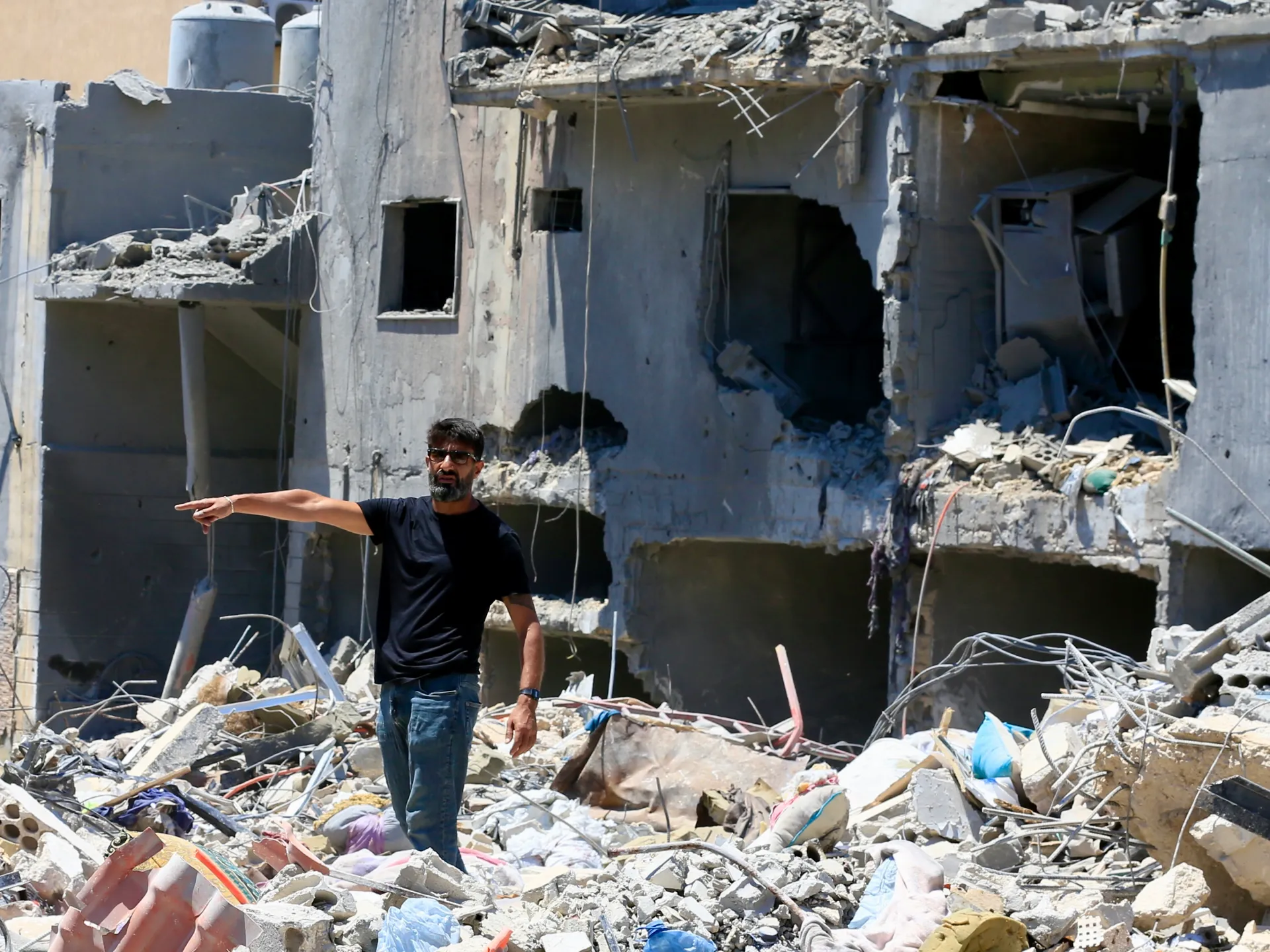
Renewed Violence in Southern Lebanon
Recent Israeli aerial assaults on southern Lebanon have reportedly led to the deaths of at least five individuals, coinciding with the Israeli military's issuance of evacuation orders for residents across 24 Lebanese communities. These developments unfold amidst a supposed United States-brokered ceasefire, raising concerns about the enduring volatility in the region.
Reports from Lebanon's National News Agency (NNA) indicate that one person was killed in an air raid targeting Maarakeh, a town situated in the Tyre District. Further casualties were reported, including Ali Badie, the mayor of Ar-Rihan municipality, who died in an Israeli strike in the Jezzine district of southern Lebanon. Additionally, three fatalities occurred in the towns of Deir al-Zahrani and Kafr Reman, both located within the Nabatieh District. The NNA also documented extensive damage to homes and government structures in Bint Jbeil, southern Lebanon, following Israeli attacks conducted in the early morning hours.
Forced Displacement Orders Issued
In a significant escalation, the Israeli military has directed residents of 24 Lebanese towns and villages to evacuate their homes immediately and relocate "north of the Zahrani River." This directive applies to a broad geographical area, encompassing communities such as Deir al-Zahrani, al-Namirieh, al-Sharquieh, al-Dewayr, Harouf, Habboush, Kfarjoz, Zibdine (Nabatieh), Nabatieh al-Tahta, Nabatieh al-Fawqa, Kfar Rouman, Al-Mahmoudieh, Sajed (Jezzine), Reihan, Aaramta, Kfarchouba, Mlki, Al-Lawiza (Jezzine), Jarjouh, and Arab Salim. These orders underscore a deepening humanitarian concern and suggest a potential expansion of military operations within Lebanese territory.
The Israeli military had previously reported an air raid alert in the northern Israeli town of Metula due due to the "infiltration of a hostile aircraft" from Lebanon. While the military did not explicitly name Hezbollah, the incident highlights the ongoing cross-border tensions. Al Jazeera's Heidi Pett, reporting from Beirut, noted that Israeli air attacks extended into towns and villages well north of the 'Yellow Line'—a designation used by Israelis for the southern Lebanese area they have sought to control or occupy. This suggests a broadening scope of Israeli military activity beyond previously acknowledged operational zones.
Regional Diplomatic Context and Ceasefire Challenges
These latest hostilities occur against a backdrop of complex regional diplomatic efforts. Pakistani Prime Minister Shehbaz Sharif announced on Friday that the United States and Iran had reportedly agreed on the preliminary wording of a deal aimed at de-escalating their broader conflict, with mediators actively working to finalize the agreement. Iranian media outlets have indicated that this initial agreement would declare an end to hostilities "on all fronts, including Lebanon."
However, the recent Israeli actions in Lebanon have sparked fears that they could jeopardize such a deal, particularly since Israel is not a direct party to the US-Iran negotiations and its leadership has expressed no intention of withdrawing from Lebanon. This situation creates a challenging dynamic, where localized conflicts could undermine broader peace initiatives.
Furthermore, the current fighting persists despite a purported ceasefire agreed upon earlier this month between Israeli and Lebanese officials. This agreement was intended to mandate a "complete cessation" of fire by Hezbollah. The continuation of hostilities, therefore, casts doubt on the effectiveness and adherence to such agreements. The next round of talks between Israel and Lebanon is anticipated on June 22, with the objective of achieving a comprehensive resolution to the ongoing conflict.
Lebanese Leadership's Call for Unity
In response to the escalating crisis, Lebanese President Joseph Aoun emphasized the critical juncture facing the nation. Speaking on the anniversary of the 1978 assassination of former minister Tony Suleiman Frangieh, Aoun articulated a stark choice for Lebanon: to evolve into "a sovereign state that monopolises arms and upholds the rule of law" or to remain "hostage to the logic of militias and the culture of exclusion."
Aoun underscored the existential necessity of national unity, stating, "We are at a moment that tolerates neither sectarian luxury nor regional tug-of-war." His remarks highlight the internal divisions and external pressures that continue to shape Lebanon's political landscape, urging a collective resolve to navigate the current challenges and assert national sovereignty amidst regional conflicts.
Source: Original Article
Related Articles
 news
news
Vietnamese Authorities Dismantle Major Cat Theft Ring, Rescuing Hundreds of Felines
 news
news
Controversial Property Fair in London Sparks Debate Over Israeli Settlements
 news
news
UK Prime Minister Condemns 'Reckless' Russian Warning Shots in English Channel
 news
news