
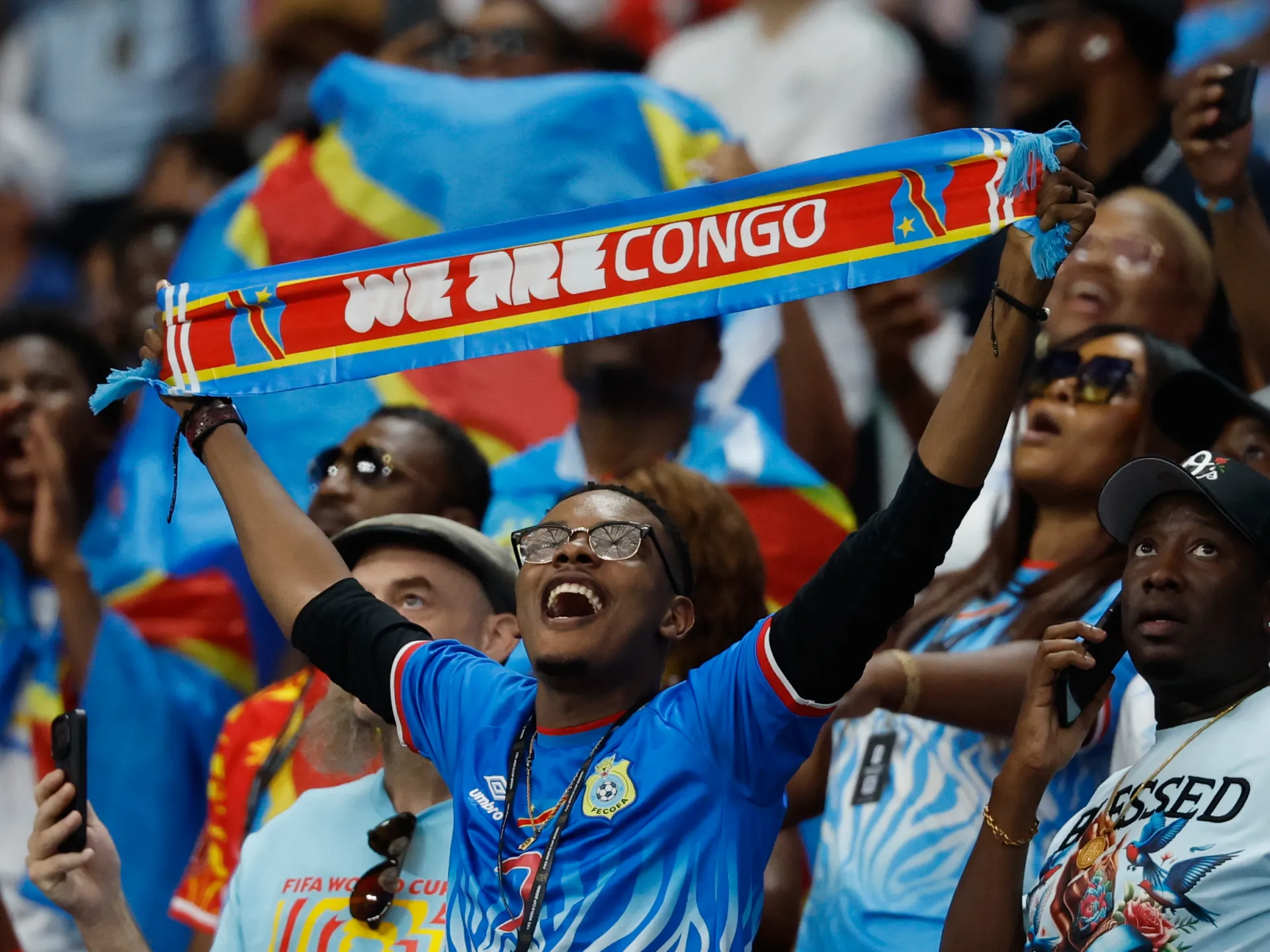
A Resurgent Nation on the Global Stage
The Democratic Republic of Congo's national football team, known as the Leopards, concluded their remarkable World Cup journey with a defeat to England in the Round of 16. However, for many Congolese, this campaign transcended the outcome of any single match, marking a significant chapter in the country's sporting history. Over five decades since their last appearance on football's biggest stage, the Leopards' performance offered a powerful symbol of unity and pride to a nation often contending with conflict, disease, and political instability.
Héritier Muyisa, a 28-year-old student in Bunia, articulated this sentiment to Al Jazeera, stating, "It's rare that I feel proud to be Congolese. During this World Cup, our national team made us proud, as if nothing were wrong. I believe I am witnessing the greatest generation in the history of the DRC." This collective pride underscored the profound impact of the team's achievements.
A Stark Contrast to Past Appearances
The 2026 World Cup campaign presented a stark contrast to the team's only previous World Cup participation in 1974, when they competed as Zaire. In that tournament, the Leopards suffered heavy defeats to Scotland, Yugoslavia, and Brazil, failing to score a single goal. Lukambila Jacques, 65, who witnessed the 1974 campaign, recalled to Al Jazeera, "We were a great nation back then. Losing by such heavy score lines without scoring a single goal felt like a curse."
This year, the team's revival was significantly personified by Yoane Wissa. His three goals made him the DR Congo's first World Cup scorer and established him as the country's leading goal-scorer in the tournament's history. His pivotal header against Portugal not only broke a 52-year goal drought for the nation in the World Cup but also solidified the belief among many supporters that the Leopards belonged among the elite.
Dorcas Mudimo, a 26-year-old resident of Bunia, expressed her astonishment and pride to Al Jazeera following the defeat to England, remarking, "I didn't expect young people like them – like us – to make more than 100 million people proud. It's a source of pride for the whole of Central Africa."
Milestones on the Path to Belief
The Leopards' journey was characterized by a series of significant milestones that steadily transformed initial hopes into genuine belief. The draw against Portugal, for instance, ignited widespread celebrations across the country, from Kinshasa and Goma to Bunia. In Bunia, fans consistently gathered to celebrate after each DR Congo match, with the game against England bringing many streets to a standstill.
Manassé Limbaya reflected on the campaign, describing it as "stellar" from the qualifiers onwards. He told Al Jazeera, "I thought we'd be content just to qualify for the World Cup. But our players showed we could compete with Portugal, Spain and other major nations. We beat Cameroon and Nigeria before overcoming Jamaica in the intercontinental playoffs. That's when we knew this team was capable of something special." The team's impressive run included a draw with Portugal, a victory against Uzbekistan, and a narrow loss to Colombia before their eventual elimination by England.
Cephas Agbwabe, a resident of Bunia, recounted his experience of the match against England, stating to Al Jazeera, "My heart was racing throughout the match against England. They have world-class stars, but I knew we would give them a hard time."
The Final Whistle and Enduring Pride
Every DR Congo match saw viewing centers in Bunia packed with enthusiastic crowds, with celebrations frequently spilling into the streets. However, the mood during the England match shifted as the game progressed. As the Leopards' chances dwindled, the cheers subsided, and when the final whistle blew, many supporters stood in silence or quietly returned home, absorbing the end of a campaign that had surpassed most expectations.
England captain Harry Kane acknowledged the resilience of the Congolese side, noting, "We spoke before about pounding the rock. That was our motto before the game. We knew there was going to be a tough rock to break down, and they proved it."
DR Congo coach Sebastien Desabre emphasized the team's achievements rather than solely focusing on the result. The Frenchman told reporters, "It's true that we're disappointed, because we believed we could do it. I think we played a good match. In the end, we conceded a few chances. One of the best players in the world scored two goals against us." Desabre attributed the defeat to fine margins rather than a significant disparity in quality. He concluded, "It's time to give the players credit for what they've shown. We were perhaps beaten by a little bit of experience in the closing stages. That's the nature of football. We learn, and we keep improving."
For supporters in Bunia, the team's elimination did little to diminish the profound sense of accomplishment. Fifty-two years after their last World Cup appearance, where they left without a point or a goal, the Leopards returned to the global stage and demonstrated their ability to compete with some of the world's most established footballing nations. Agbwabe encapsulated this sentiment, telling Al Jazeera, "It was the first time I'd heard my country's national anthem at a World Cup finals. I hope, one day, I'll tell my children I witnessed these glorious moments."
Source: Original Article
Related Articles
 sport
sport
Switzerland Advances to World Cup Round of 16 After Dominant Performance Against Algeria
 sport
sport
Argentina Prepares for World Cup Round of 32 Clash Against Debutant Cape Verde
 sport
sport
Portuguese Supporters Celebrate World Cup Victory in Toronto
 sport
sport