
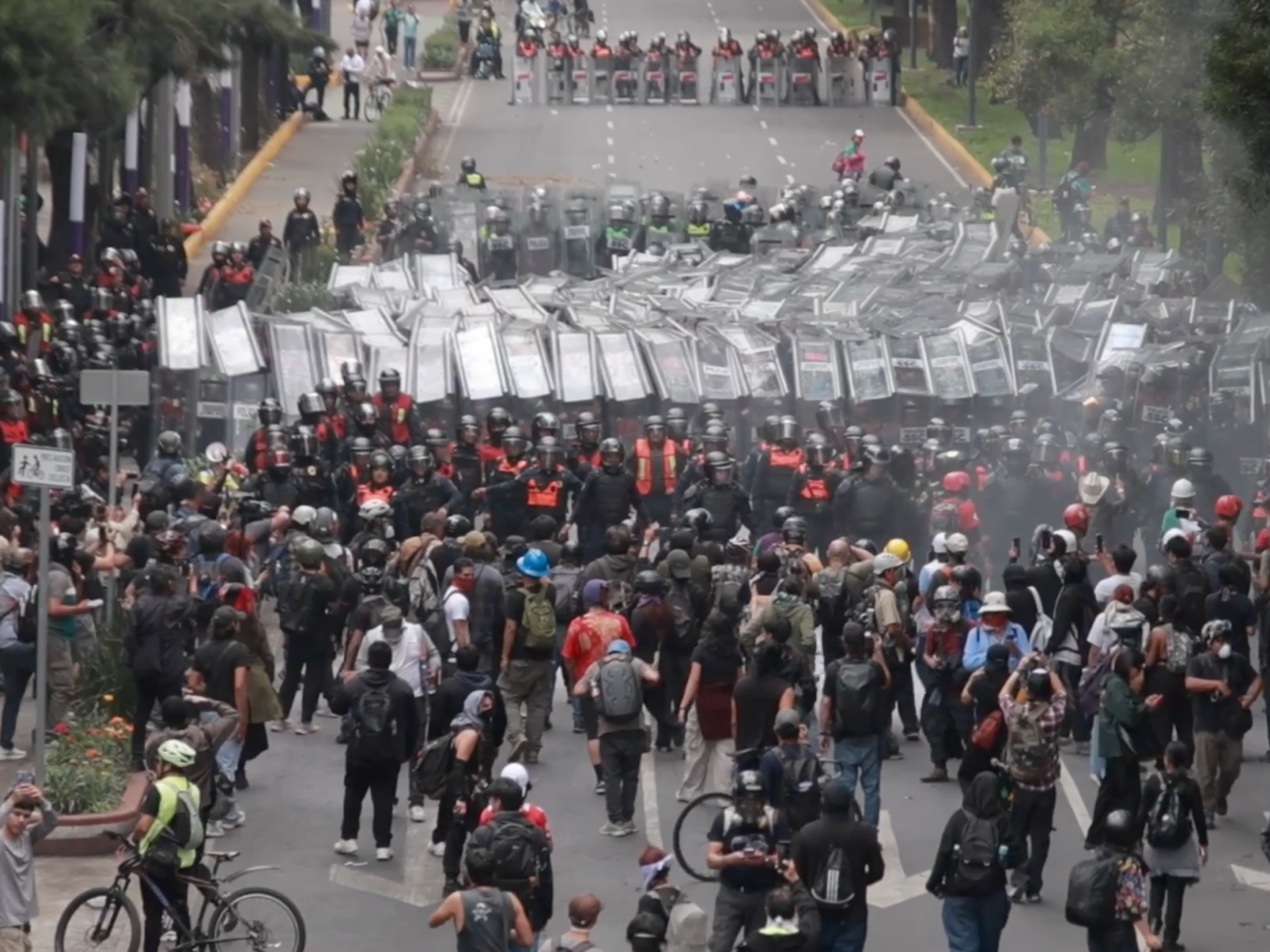
Tensions Rise Outside Azteca Stadium as World Cup Commences
The highly anticipated opening of the FIFA World Cup was met with demonstrations outside Mexico City's iconic Azteca Stadium, where protesters engaged in clashes with law enforcement personnel. The incidents occurred shortly before the inaugural match, drawing attention to a range of societal concerns that various activist groups aim to spotlight on the global stage provided by the international football tournament.
Background to the Protests
Mexico City, a vibrant metropolis, often serves as a focal point for social and political activism. The decision to host the World Cup, while bringing economic opportunities and international prestige, also provides a significant platform for groups seeking to amplify their messages. The timing of these protests, coinciding with a major global event, appears to be a deliberate strategy to ensure maximum visibility for their causes.
Historically, large-scale international events, such as the Olympic Games or the World Cup, have frequently been accompanied by protests. These events concentrate media attention and draw large crowds, making them opportune moments for activists to raise awareness about local and national issues that they believe are being neglected or mishandled by authorities. The current demonstrations in Mexico City align with this pattern, as various factions coalesce to articulate their grievances.
Key Demands of the Protesters
The protesting groups represent a diverse spectrum of concerns, indicating a broad range of societal issues that are motivating their actions. Among the primary demands articulated by demonstrators are calls for significant education reforms. Activists argue that the current educational system is failing to adequately serve the needs of the population, citing issues such as underfunding, curriculum deficiencies, and lack of access in certain regions. They advocate for systemic changes that would ensure more equitable and higher-quality education for all citizens.
Another critical issue highlighted by the protesters is the pervasive problem of disappearances. Mexico has grappled with a severe crisis of missing persons, a phenomenon often linked to organized crime, state corruption, and impunity. Families of the disappeared and human rights organizations have long demanded greater accountability from the government, more effective search efforts, and justice for victims. The World Cup provides a moment to re-emphasize these urgent pleas, hoping to garner international pressure and attention on a deeply painful national issue.
Beyond these specific concerns, some groups are also protesting broader socio-economic disparities, perceived government corruption, and issues related to human rights. The convergence of these diverse demands underscores a sentiment of widespread dissatisfaction with various aspects of governance and social welfare within the country.
Confrontations with Police
Eyewitness accounts and media reports indicate that the clashes between protesters and police involved altercations that escalated outside the stadium perimeter. Details regarding the exact nature of these confrontations, including the methods used by both sides, remain subject to ongoing assessment. However, the presence of security forces was notably heightened in anticipation of potential disruptions, a common measure taken during high-profile events.
Authorities typically deploy significant police contingents to manage crowds, ensure public safety, and maintain order during large gatherings. While the stated aim is to facilitate peaceful assembly and prevent unrest, interactions between protesters and law enforcement can sometimes lead to tension and conflict, especially when demonstrations disrupt planned events or infrastructure.
Implications for the Tournament
The protesting groups have explicitly warned of further disruptions throughout the World Cup tournament. This signals a sustained effort to leverage the global spotlight on Mexico for the duration of the event. The potential for ongoing demonstrations poses a challenge for tournament organizers and host cities, who are tasked with ensuring the smooth operation of matches and related activities while upholding the right to peaceful protest.
The international media presence during the World Cup means that any further incidents could quickly gain global attention, potentially influencing perceptions of the host nation. The ability of authorities to manage these situations, balancing security concerns with democratic freedoms, will be closely watched. The ongoing nature of these protests suggests that the narrative surrounding the World Cup in Mexico may extend beyond the football pitches, incorporating significant social and political dimensions.
Broader Context of Protest Movements
The protests in Mexico City are not isolated incidents but rather part of a broader global trend where major sporting events are increasingly becoming venues for social and political advocacy. From environmental concerns at the Olympics to labor rights at other international tournaments, activists are consistently finding ways to utilize these platforms to push their agendas. This trend reflects a growing awareness among activist communities of the power of global media attention and the leverage that comes with disrupting or drawing attention to events of international significance.
The situation outside Azteca Stadium serves as a reminder that large-scale international events, while celebrated for their sporting prowess and cultural exchange, are also intricately linked to the socio-political realities of their host nations. The demands for education reform and accountability for disappearances represent deeply rooted issues that continue to resonate within Mexican society, now amplified on a world stage.
Source: Original Article
Related Articles
 news
news
Vietnamese Authorities Dismantle Major Cat Theft Ring, Rescuing Hundreds of Felines
 news
news
Controversial Property Fair in London Sparks Debate Over Israeli Settlements
 news
news
UK Prime Minister Condemns 'Reckless' Russian Warning Shots in English Channel
 news
news