
Recent Cross-Border Attacks Result in Fatalities
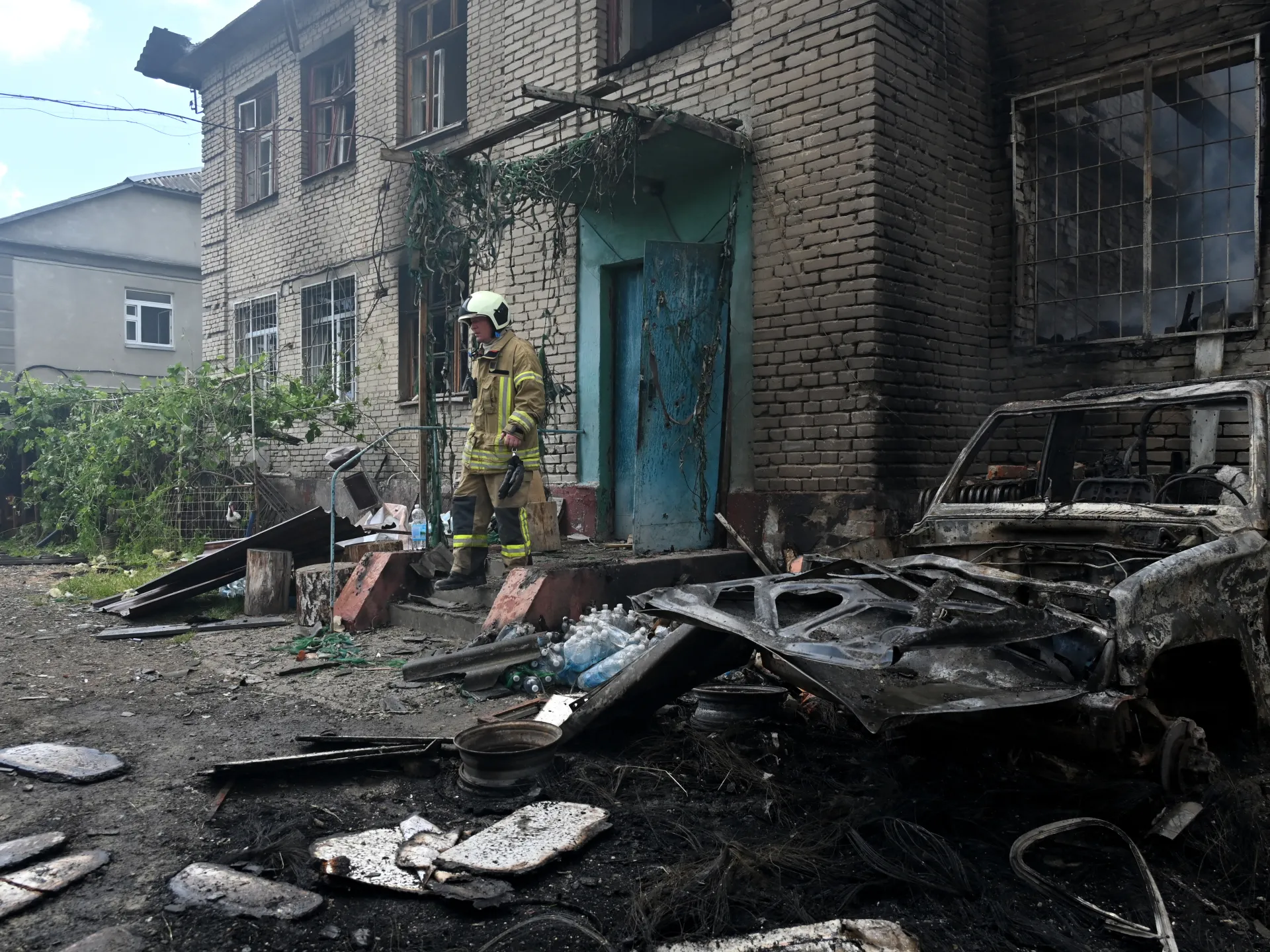
In a recent escalation of hostilities between Russia and Ukraine, officials from both nations have reported civilian casualties and damage following a series of cross-border attacks. The incidents, which occurred in Russia's Bryansk region and Ukraine's Sumy region, underscore the ongoing intensity of the conflict.
Russian authorities confirmed that two individuals were killed and two others sustained injuries in the Bryansk region. According to Acting Governor Egor Kovalchuk, the settlement of Suzemka was struck by Ukrainian artillery. This attack marks another instance of cross-border shelling impacting civilian areas within Russia.
Concurrently, Ukraine reported a fatality in its Sumy region, where a drone attack claimed the life of a 44-year-old woman. The victim, identified as a rail station operator, was reportedly en route to a shelter when the strike occurred. Another female station attendant was also wounded in the same incident, as stated by Oleksandr Pertsovkyi, head of Ukrainian Railways. Additionally, three people were injured in separate attacks on Ukraine's southern Mykolaiv region.
Wider Impact of Strikes on Russian Territory
Beyond the Bryansk region, other parts of Russia have also experienced drone attacks. In Tatarstan, a drone reportedly struck an apartment building, leading to injuries for three individuals. Regional head Rustam Minnikhanov indicated that industrial facilities were also targeted, though he noted that production work was not suspended. Tatarstan is recognized for its significant oil processing and petrochemical infrastructure.
The city of Togliatti, located on the Volga River approximately 800 km (500 miles) southeast of Moscow and home to Russia's largest car manufacturer, Avtovaz, also faced a drone attack. Samara region Governor Vyacheslav Fedorishchev issued a warning regarding the drone activity in the area.
These strikes align with what Ukrainian officials describe as a strategy of 'logistics lockdown.' According to Al Jazeera's Audrey MacAlpine, reporting from Kyiv, these are mid-range strikes, often exceeding 30 kilometers (17 miles) from the front lines. They utilize long-range drones and, at times, heavy weaponry to target critical infrastructure such as oil refineries, bridges, and logistical routes. The objective is to impede Russia's front-line operations by disrupting supply chains.
MacAlpine further explained that Ukraine also employs what it terms 'long-range sanctions' against Russian targets. This refers to an escalating pattern of targeting Russia's oil refineries and overall oil industry, a tactic that has become more prominent in recent months.
Ukrainian Vulnerabilities and Russian Advances
While Ukraine executes strikes deep within Russian territory, it continues to face significant threats from Russian forces. MacAlpine highlighted that Russia's use of ballistics remains a critical challenge for Ukraine, particularly in cities like Kyiv, which have repeatedly endured massive attacks.
On the battlefield, Russia's TASS news agency reported that Russian forces had taken control of the settlement of Priyut, situated approximately 25 kilometers (15.5 miles) southwest of Kramatorsk in Ukraine's Donetsk region. Ukrainian authorities have not yet issued a response to this claim.
Fuel Shortages in Crimea Following Ukrainian Attacks
In recent months, Ukraine has intensified its attacks on Russian-held territories, notably targeting the Crimean Peninsula. This strategy has reportedly led to fuel shortages in Crimea, which Russia annexed in 2014. On Thursday, reports emerged of petrol stations in the peninsula running out of fuel following an escalated Ukrainian campaign against supply lines.
A witness in Sevastopol, Crimea's largest city, informed Reuters that most local petrol stations lacked fuel, struggling to meet demand under a recently imposed rationing system. Similarly, in the resort town of Yevpatoriya, a long queue was observed at the sole operational petrol station. Ukrainian drone attacks have increasingly focused on disrupting supply routes to the peninsula, leading to not only fuel rationing but also shortages of some foodstuffs.
While most Russian regions maintain that their fuel supply situation is under control, attributing some disruptions to panic buying, only two regions in Siberia, in addition to Russian-held Crimea, have officially confirmed shortages. Moscow has consistently denied any significant problems with fuel supplies.
Source: Original Article
Related Articles
 news
news
Vietnamese Authorities Dismantle Major Cat Theft Ring, Rescuing Hundreds of Felines
 news
news
Controversial Property Fair in London Sparks Debate Over Israeli Settlements
 news
news
UK Prime Minister Condemns 'Reckless' Russian Warning Shots in English Channel
 news
news