
London Event Draws Scrutiny for Marketing Settlement Properties
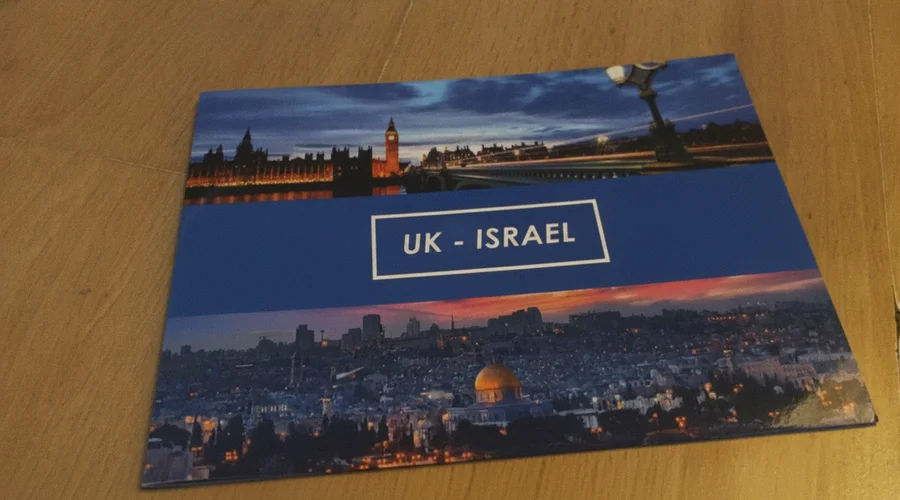
A recent property fair held in London, dubbed the 'Great Israeli Real Estate Event,' has become the focal point of a heated debate concerning the sale of properties in Israeli settlements. Activists who gained entry to the invite-only event, hosted at Edgware United Synagogue, have presented photographic evidence to Al Jazeera, suggesting that homes in areas deemed illegal under international law were being actively marketed to potential buyers.
The event, part of a broader roadshow promoting Israeli real estate, reportedly featured properties in locations such as Givat Zeev and Teneh Omarim within the occupied West Bank, as well as settlements in East Jerusalem. Leaflets circulated at the fair advertised 'exciting new projects' just a short distance from Jerusalem, including homes with amenities like pools in Maale Adumim, a West Bank settlement. These settlements are widely regarded as illegal under international law.
Inside the Fair: Observations and Marketing Strategies
An activist from the Jewish Anti-Zionist Action group, who chose to remain anonymous and identified only as Isabel, shared her observations from inside the event. She described the atmosphere as peaceful and heavily secured, noting the presence of plainclothes security personnel equipped with body cameras. Isabel reported that during her time at the fair, there was no mention of Palestinians by any participants. Instead, real estate agents reportedly referred to the occupied Palestinian territories as 'Anglo-communities,' intended for English-speaking individuals from countries such as the United States, the UK, and South Africa.
A notable selling point highlighted by real estate agents, according to Isabel, was the ongoing conflict in Gaza. Agents suggested that the conflict had led to a decrease in property prices in Israel, presenting a potential opportunity for buyers to secure discounts. Isabel likened the internal environment of the fair to a university freshers' event, characterized by social chatter, various stalls, and attendees being handed flyers. She contrasted this calm interior with the significant protest activity occurring outside the synagogue.
During her interactions with representatives from Harey Zahav, an Israeli real estate company, Isabel was shown advertisements for properties in Jerusalem and Netanya, a coastal city in central Israel. When she expressed interest in quieter locations, representatives reportedly began to discuss properties in 'Judea and Samaria' – the Israeli term for the occupied West Bank – in hushed tones. One representative indicated that organizers had advised against overtly advertising properties in these areas, attributing this caution to 'crazy times' and a perceived reluctance among some to purchase property in Israel.
Another Israeli real estate firm, Tivuch Shelly, was observed to be more reserved in discussing properties in the occupied West Bank. However, their flyers openly advertised properties in Givat Hamatos and Ramat Eshkol, two settlements located in occupied Jerusalem. At one point, an activist from the Jewish Anti-Zionist Action group reportedly interjected, loudly stating that the event was selling property on 'illegally occupied stolen Palestinian land,' before being escorted out by security.
Outcry and Calls for Action
The event drew widespread condemnation even before it commenced. Over 100 British legislators, including members of the Labour Party, signed a letter urging the government to uphold its international law obligations and prevent the event from promoting 'illegal activities.' Layla Moran, a British MP of Palestinian descent and a signatory to the letter, characterized the property sales as 'unacceptable.'
Prominent human rights organizations, including Amnesty International, along with London Mayor Sadiq Khan, publicly criticized the fair for openly advertising properties in illegal Israeli settlements. Outside the synagogue, hundreds of protesters gathered, chanting slogans and displaying signs that read, 'Stop Israel’s illegal sale of stolen Palestinian land' and 'Thou shalt not steal.' The Metropolitan Police reported 15 arrests during these demonstrations for various offenses, including public order matters.
Green Party leader Zack Polanski has since written to Mayor Khan, requesting a Metropolitan Police investigation into the event. Khan had previously confirmed discussions with the London police force, stating that any allegations of criminality related to the potentially unlawful sale of property at the fair would be assessed as part of a police probe.
Context of Israeli Settlements
Israeli settlements refer to communities of Israeli citizens built on Palestinian land. Israel began constructing these settlements following its capture of the West Bank, East Jerusalem, and the Gaza Strip during the 1967 Six-Day War. Currently, over 700,000 settlers, constituting approximately 10 percent of Israel’s population, reside in 150 illegal settlements and 128 outposts spread across the occupied West Bank and East Jerusalem. The Israeli government openly funds and supports the construction of these settlements, reportedly providing substantial annual funding to settlers in the occupied West Bank to monitor and restrict Palestinian construction in Area C, an area solely administered by Israel and comprising over 60 percent of the West Bank.
The vast majority of United Nations bodies and countries worldwide consider these West Bank settlements illegal, citing various international conventions. However, the United States has historically provided diplomatic support to Israel, frequently utilizing its veto power at the UN to shield Israel from diplomatic censure regarding these issues.
Source: Al Jazeera
Related Articles
 news
news
Vietnamese Authorities Dismantle Major Cat Theft Ring, Rescuing Hundreds of Felines
 news
news
UK Prime Minister Condemns 'Reckless' Russian Warning Shots in English Channel
 news
news
Floyd Mayweather Accused of Grand Theft and Check Fraud in Luxury Watch Purchase
 news
news