
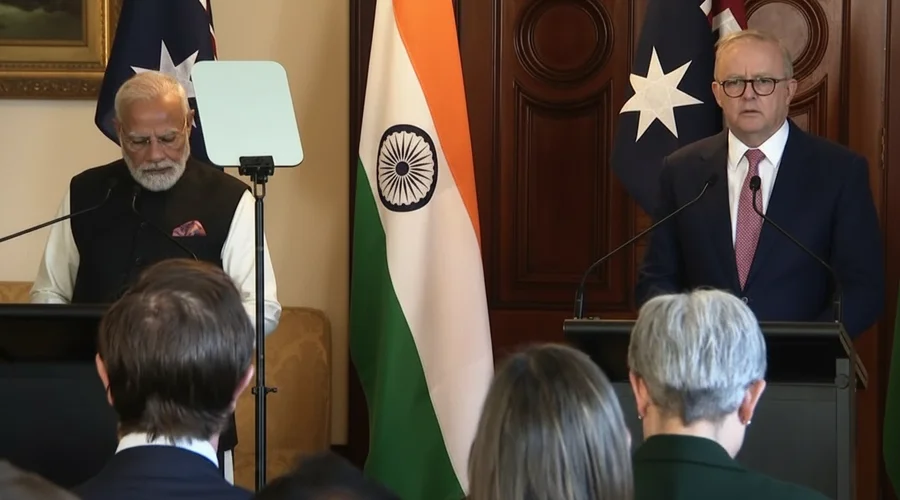
Historic Agreement Reached Between Australia and India
In a significant diplomatic and economic development, Australia has formalized an agreement to commence the sale of uranium to India. The deal, which was officially signed on July 9, marks a new chapter in the bilateral relations between the two nations, particularly concerning energy cooperation. This arrangement underscores a commitment from both countries to foster a secure and sustainable energy future, with a clear emphasis on the peaceful utilization of nuclear materials.
The announcement was made following extensive negotiations and reflects a strategic decision to enhance India's energy security while adhering to international non-proliferation standards. Australian Prime Minister Anthony Albanese articulated the core objective of these uranium exports, stating that they are intended solely for peaceful purposes. He further elaborated that a primary motivation behind the agreement is to assist India in diversifying its energy portfolio and, crucially, to diminish its reliance on fossil fuels. This aligns with global efforts to combat climate change and transition towards cleaner energy sources.
The Context of the Agreement
For many years, the prospect of Australia supplying uranium to India had been a subject of considerable discussion and debate. Australia possesses approximately one-third of the world's recoverable uranium resources, making it a pivotal player in the global nuclear energy market. India, on the other hand, has a growing energy demand driven by its rapidly expanding economy and population. While India has a domestic uranium supply, it is insufficient to meet the needs of its ambitious nuclear power program, which is seen as a key component of its long-term energy strategy.
Historically, Australia had maintained a policy of not selling uranium to countries that had not signed the Nuclear Non-Proliferation Treaty (NPT). India, a nuclear weapons state, is not a signatory to the NPT. However, in recent years, there has been a shift in this stance, influenced by India's strong non-proliferation record regarding civilian nuclear facilities and its adherence to International Atomic Energy Agency (IAEA) safeguards. This policy evolution paved the way for the current agreement, which includes robust safeguards to ensure the uranium is used exclusively for civilian energy production.
Implications for India's Energy Sector
The acquisition of Australian uranium is expected to provide a substantial boost to India's nuclear energy program. India currently operates a number of nuclear power plants and has plans for significant expansion. The consistent supply of uranium from a reliable source like Australia will be critical for the uninterrupted operation of existing reactors and the timely commissioning of new ones. This move is anticipated to enhance India's energy independence, reducing its vulnerability to fluctuations in international oil and gas markets.
Furthermore, by increasing its nuclear power generation capacity, India aims to reduce its carbon footprint. The country has committed to ambitious climate goals, including targets for renewable energy and a reduction in emissions intensity. Nuclear energy, as a low-carbon power source, plays a vital role in achieving these objectives, providing a stable baseload power supply that complements intermittent renewable sources like solar and wind.
The agreement underscores a shared vision for a sustainable energy future, with both nations recognizing the importance of nuclear power in addressing climate change and ensuring energy security. The strict safeguards embedded within the deal are crucial for maintaining international confidence in the peaceful applications of nuclear technology.
Economic and Geopolitical Significance
Beyond the immediate energy benefits, the uranium deal carries broader economic and geopolitical significance. For Australia, it represents a diversification of its export markets and a strengthening of its economic ties with a major Asian power. India's growing economy presents numerous opportunities for Australian businesses, and this agreement is likely to foster further collaboration across various sectors.
From a geopolitical perspective, the deal reinforces the strategic partnership between Australia and India. Both countries are members of the Quad (Quadrilateral Security Dialogue), an informal strategic forum that also includes the United States and Japan. This partnership is increasingly important in the Indo-Pacific region, and enhanced cooperation on energy and technology can contribute to regional stability and prosperity.
The agreement also sends a signal about the evolving global nuclear landscape, where pragmatic engagement with nuclear-capable states that demonstrate a commitment to civilian nuclear energy and robust safeguards is becoming more common. This approach seeks to balance non-proliferation concerns with the legitimate energy needs of developing nations.
Future Outlook
The commencement of uranium sales from Australia to India marks a pivotal moment in their relationship. It signifies a mutual trust and a shared understanding of the critical role nuclear energy can play in addressing contemporary challenges such as climate change and energy security. The implementation of this agreement will be closely watched by the international community, particularly concerning the adherence to safeguards and the peaceful application of the supplied uranium. As India continues its trajectory of economic growth, access to reliable and clean energy sources will be paramount, and this partnership with Australia is poised to be a cornerstone of that endeavor.
Source: Original Article
Related Articles
 economy
The Growing Intersection of Cryptocurrency with Politics and Sanctioned States
 economy
Australia and India Sign Landmark Uranium Export Agreement
 economy
Russian Bankruptcy Surge Amidst Ukraine Conflict: An Economic Overview
 economy