
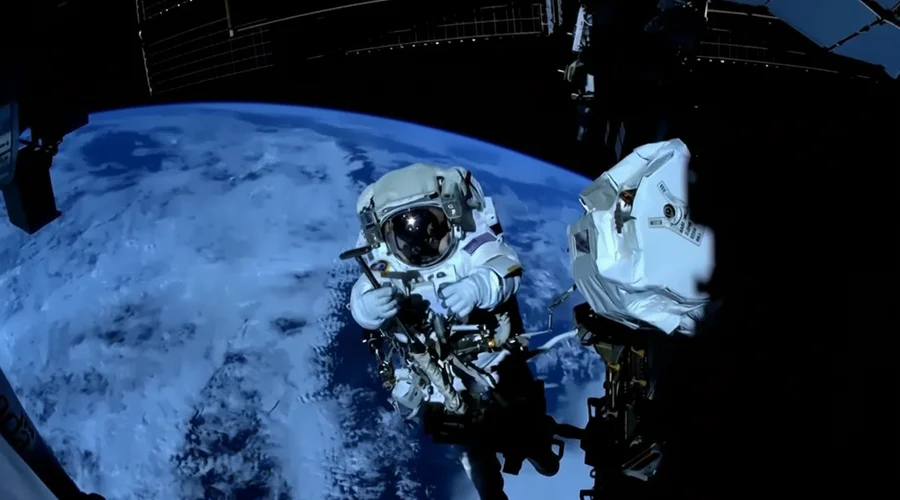
Astronauts Address Robotic Arm Malfunction
Two NASA astronauts recently undertook a critical spacewalk outside the International Space Station (ISS) to address a malfunction within the station's primary robotic arm. The operation focused on replacing a wrist joint that had ceased to function as intended during routine procedures. The successful completion of this intricate repair ensures the continued operational capability of the Canadarm2, a vital component for station maintenance, cargo handling, and scientific experiments.
Details of the Extravehicular Activity
The extravehicular activity (EVA), commonly known as a spacewalk, was carried out by two experienced NASA astronauts. Their mission was to meticulously remove the compromised wrist joint and install a new, fully functional replacement. This particular component is crucial for the robotic arm's dexterity and its ability to perform precise movements, which are often required for grappling visiting spacecraft or repositioning external equipment. The spacewalk itself was a testament to the rigorous training and preparation undertaken by astronauts for such complex tasks in the unforgiving environment of space.
The spacewalk extended over a period of seven hours and twenty minutes. This duration is typical for EVAs that involve significant repair or installation work, reflecting the methodical pace required to perform tasks while wearing bulky spacesuits and operating in microgravity. Every step of the procedure, from detaching the old component to securing the new one, was carefully planned and executed with precision. Communication with mission control on Earth was maintained throughout the duration, providing real-time support and guidance.
Importance of the Canadarm2
The robotic arm, officially known as the Mobile Servicing System or Canadarm2, is an indispensable asset to the International Space Station. Developed by the Canadian Space Agency, it plays a multifaceted role in the station's operations. Its primary functions include:
- Grappling Visiting Vehicles: The arm is frequently used to capture uncrewed cargo spacecraft, such as Northrop Grumman's Cygnus and SpaceX's Dragon, as they approach the ISS. Once captured, the arm berths them to a port on the station, allowing for the transfer of supplies and scientific equipment.
- Moving Equipment: It can relocate large components of the station, including modules, scientific payloads, and external platforms. This capability is essential for the ongoing assembly and maintenance of the orbital outpost.
- Supporting Spacewalkers: Astronauts often use the arm as a mobile work platform during spacewalks, allowing them to reach various parts of the station's exterior for repairs, upgrades, or scientific installations.
- Inspection and Monitoring: Equipped with cameras and sensors, the arm can be used to inspect the exterior of the station for damage or wear, providing crucial data for mission control and the crew.
A malfunction in any part of the Canadarm2 can significantly impact the station's ability to conduct these critical operations, making the recent repair a high-priority task. The wrist joint, in particular, is vital for the arm's flexibility and range of motion, enabling it to manipulate objects with precision.
Operational Context of the Failure
The failure of the wrist joint occurred during what NASA described as 'normal operations.' This indicates that the malfunction was not triggered by an unusual event or an emergency, but rather during routine usage. Such mechanical failures are not uncommon in complex machinery, especially when subjected to the extreme conditions of space, including temperature fluctuations, radiation exposure, and continuous operation. Regular maintenance and the capability to perform in-orbit repairs are therefore integral to the long-term viability of the ISS.
Broader Implications for Space Operations
The successful repair highlights the resilience and adaptability of human spaceflight programs. The ability to diagnose and rectify complex mechanical issues in space, through the collaborative efforts of astronauts and ground control, is a cornerstone of sustained human presence in orbit. This incident also underscores the continuous need for robust engineering, redundant systems, and thorough astronaut training to ensure the safety and operational efficiency of space assets. As humanity looks towards longer-duration missions to the Moon and Mars, the lessons learned from such repairs on the ISS will undoubtedly contribute to the development of future spacecraft and habitats.
The return to full functionality of the Canadarm2 ensures that the International Space Station can continue its crucial role in scientific research, technological development, and international collaboration for the foreseeable future.
Source: Original Article