
Widespread Unrest and Fear in Belfast
Belfast, Northern Ireland, has recently been gripped by a wave of anti-immigrant unrest, sparking fear and displacement among the city's ethnic minority communities. The violence erupted in the wake of a knife attack, intensifying existing racial tensions and leading to a series of targeted assaults on individuals, homes, and businesses.
Zeinab, a Sudanese mother of three, recounted her terror as the violence unfolded near her east Belfast home. Like many others from ethnic minority backgrounds, she felt compelled to evacuate her family with the assistance of an NGO, the Anaka Women’s Collective, finding refuge with an Irish family outside the city. Her experience highlights the profound impact of these events on vulnerable populations.
The incident that triggered the latest wave of unrest involved a 30-year-old Sudanese national, who has since been charged with attempted murder. The victim, 44-year-old Stephen Ogilvie, sustained severe, life-altering injuries. Zeinab expressed her condemnation of the attack, emphasizing that the suspect's nationality does not reflect the character of the Sudanese people, whom she described as kind, generous, and moral.
Targeted Attacks and Community Impact
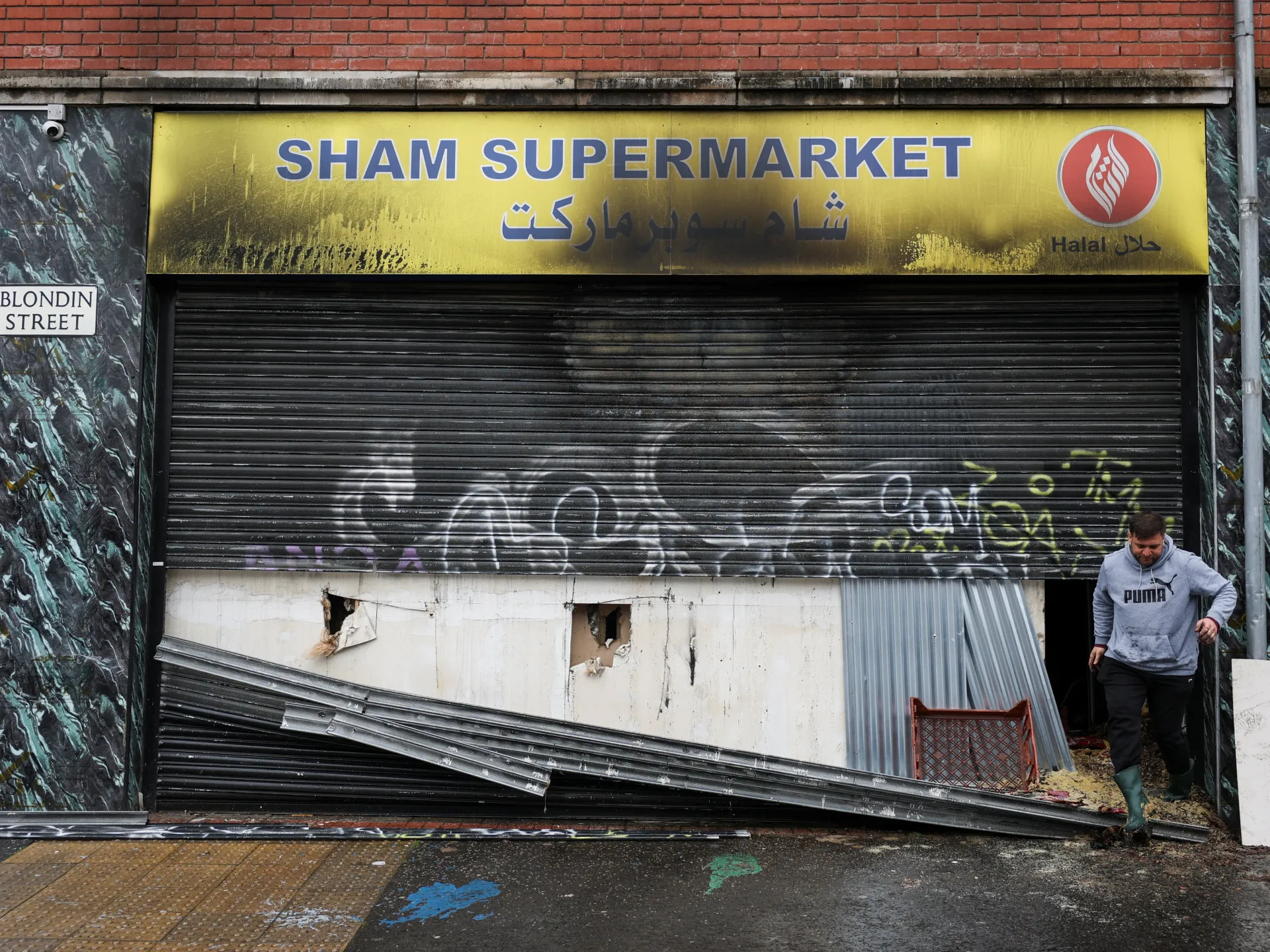
The anti-immigrant rioters have systematically targeted properties believed to be owned or inhabited by ethnic minorities. Homes and businesses have been set ablaze, and the atmosphere across Belfast has become increasingly tense. On a recent Tuesday evening, an eerie silence descended upon the city as traders, responding to threats circulated on social media, hastily closed their shops early.
A list, reportedly created by artificial intelligence and amplified by prominent figures like Tommy Robinson and Elon Musk, called for businesses to shut down by a specific time, naming streets in the Northern Irish capital. Another list, circulating concurrently, identified approximately 70 locations across the United Kingdom. Robinson, a far-right agitator, urged people to take to the streets, claiming an 'invader attack' on the population.
Hundreds responded to these calls, with young individuals, some appearing as young as 13, marching towards east Belfast's Lower Newtownards Road. Within an hour, vehicles, including a bus, were set alight, sending plumes of smoke into the evening sky. Disturbingly, some perpetrators were reportedly as young as 10 years old. Graffiti explicitly targeting Islam, such as 'F*** Islam,' appeared on the shutters of a halal butcher shop, indicating a heightened anti-Islam sentiment in this particular series of riots, a trend noted by Patrick Corrigan, Amnesty International's Northern Ireland Director.
Video footage from the incidents showed crowds smashing windows, kicking down doors, and attempting to intimidate or forcibly remove residents from houses believed to be occupied by migrants. A significant number of adults were observed watching these young rioters, who terrorized Belfast's relatively small but growing ethnic minority communities.
Demographics and Historical Context
According to the 2022 census, only 3.4 percent of Northern Ireland's population, roughly 65,000 people, identify as being from an ethnic minority background. In a country of 1.9 million, a mere 2,379 individuals are seeking asylum. However, this marks the third consecutive summer Northern Ireland has experienced organized racist violence, with each outbreak reportedly more severe than the last, as highlighted by Corrigan.
These events mirror coordinated attacks seen in England in recent years, following a recurring pattern: civil unrest in the aftermath of a crime, whether alleged or proven, where the accused or guilty party is not white. In a similar vein to the recent killing of teenager Henry Nowak in southern England, the victim's family in Belfast has publicly condemned the street disorder, rejecting any attempts to 'divide people or fuel hostility.'
The phrase 'No HMOs' (Houses in Multiple Occupation) was found graffitied on a building, reflecting a targeted animosity towards shared housing arrangements, which often serve as an affordable entry point for new migrants.
Societal and Political Responses
Geraldine Hanna, Northern Ireland's victims of crime commissioner, expressed concern over the power of 'distant and faceless digital actors' to rapidly paralyze the region's largest city. She noted that Belfast effectively shut down due to fear, with schools, public transport, and businesses closing in response to online threats. Hanna questioned why the government was not treating these attacks as 'domestic terrorism,' arguing that the onus was falling on civil society organizations to provide immediate assistance and devise counter-strategies.
Other demonstrations in larger urban centers across Northern Ireland involved masked individuals, some of whom set up informal checkpoints, interrogating drivers about the presence of 'foreigners.' Police officers have also come under attack, with bricks and masonry thrown at them in north Belfast.
Approximately 200 families have been evacuated, according to the Participation and Practice of Rights charity. The Northern Ireland Housing Executive has assisted 29 households and is currently assessing property damage. A 'hit list' of properties believed to be HMOs in south Belfast, seemingly scraped from public data and encompassing social housing and student accommodation, circulated on Facebook. Ethnic minority support groups believe this was intended to intimidate vulnerable individuals.
At the political level, responses from North Belfast MP John Finucane and Northern Ireland's First Minister Michelle O’Neill, both from the Republican Sinn Fein party, were perceived as effective in de-escalating tensions. However, Jon Burrows, the new Ulster Unionist Party leader, reported being 'threatened' by a 'baying mob' at Lower Newtownards Road, where journalists also faced intimidation. In contrast, Democratic Unionist Party (DUP) politicians defended the protests, citing 'legitimate immigration concerns,' with party leader Gavin Robinson advocating for the closure of the 'open and porous border' with Ireland.
Source: Original Article
Related Articles
 news
news
Vietnamese Authorities Dismantle Major Cat Theft Ring, Rescuing Hundreds of Felines
 news
news
Controversial Property Fair in London Sparks Debate Over Israeli Settlements
 news
news
UK Prime Minister Condemns 'Reckless' Russian Warning Shots in English Channel
 news
news