
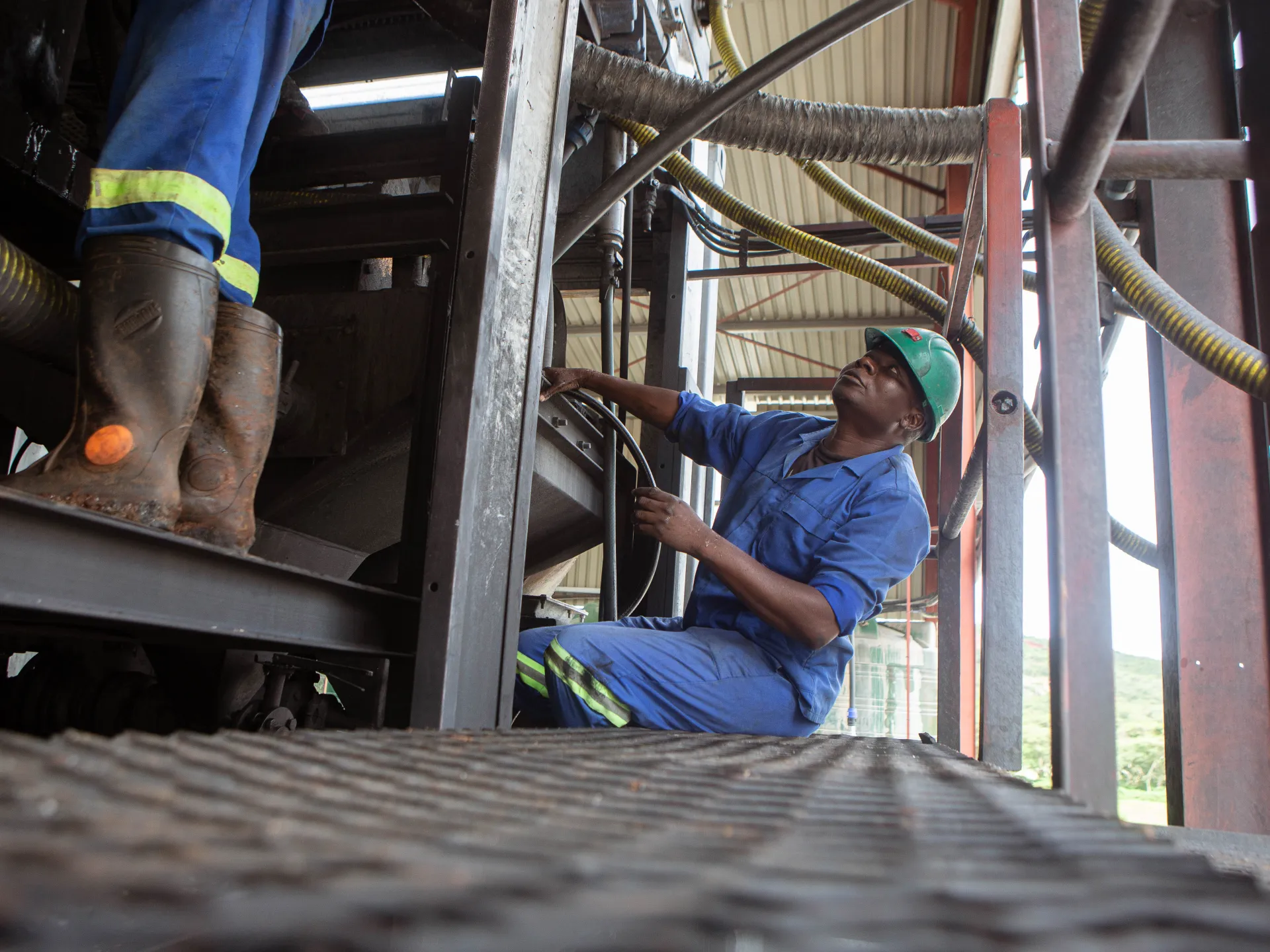
A New Era for African Mineral Resources
African governments are initiating a transformative period in their approach to natural resources, particularly critical minerals. This shift involves a stronger insistence on domestic processing and refining of these valuable commodities before they are exported, a departure from historical practices where raw materials were predominantly shipped out. This evolving stance, articulated by leaders such as Kenyan President William Ruto, suggests a concerted effort to redefine the terms of engagement in the global extractive industry.
President Ruto's announcement at the G7 summit regarding Kenya's critical minerals agreement with the United States highlighted this new direction. Kenya's demand for in-country refinement of rare earths, lithium, graphite, copper, nickel, and niobium signifies a move beyond merely exporting raw materials. This is not an isolated incident; similar policies are emerging across the continent. Namibia has imposed bans on the export of unprocessed lithium, cobalt, manganese, graphite, and rare earths. Mali is investing in gold refining capabilities, while Ghana plans to acquire a significant portion of large-scale gold output to bolster local refining and reserves. These actions collectively indicate a continent-wide ambition to leverage natural resources for internal industrial development rather than solely for external profit generation.
The Strategic Importance of Critical Minerals
The global demand for critical minerals is experiencing an unprecedented surge, primarily driven by the accelerating transition to green technologies. Lithium consumption, for instance, saw a nearly 30 percent increase in 2024, fueled by investments in electric vehicles, battery storage, renewable energy systems, and advanced manufacturing. Projections from the International Energy Agency (IEA) suggest a fivefold increase in lithium demand by 2040, with graphite and nickel requirements expected to double. This escalating demand places Africa, rich in these essential minerals, at a pivotal strategic position.
A key differentiator of this current commodity boom is the inherent difficulty in rapidly expanding the supply of critical minerals. New mining projects typically require more than a decade from discovery to full production, a timeline that struggles to keep pace with soaring global demand. The IEA's 'Stated Policies Scenario' forecasts a 40 percent deficit in lithium supply compared to projected demand by 2035. This supply constraint grants African governments enhanced leverage in negotiations, enabling them to push for local value addition, technology transfer, and direct industrial investment as prerequisites for resource access.
Moving Beyond Extraction: The Value Chain Imperative
Historically, Africa's economic engagement with its resources has been characterized by the simple cycle of extraction, shipment, and subsequent repurchase of finished products. The current boom in transition minerals presents a unique opportunity to dismantle this long-standing dynamic. However, achieving this requires more than just export restrictions; it necessitates robust infrastructure, including reliable power, efficient transport, accessible finance, and a skilled workforce. The real economic gains lie further along the production chain, where refining, processing, and assembly transform raw minerals into high-value products.
United Nations data vividly illustrates this point. In 2022, global exports of lithium ore and brine were valued at approximately $20 billion. In contrast, battery materials generated $51 billion, cell components and battery packs $106 billion, and electric vehicles a staggering $135 billion. Africa's challenge is to ascend this value chain. Each additional processing stage completed domestically translates into increased income, more skilled employment, and greater technological integration before the final product reaches the market. Refining is not an end in itself but a foundational step towards building the productive capabilities that distinguish manufacturing economies from purely extractive ones. The emergence of engineering firms, chemical producers, equipment manufacturers, and specialized suppliers around refinery clusters can foster broader industrial ecosystems, drawing parallels with the long-term industrial development observed in economies like Taiwan.
Shifting Global Dependencies and Historical Lessons
Africa's growing assertiveness stems from a significant shift in global supply chain dynamics. The concentration of refining capabilities, particularly in China, which dominates 19 out of 20 strategic minerals tracked by the IEA, has created new dependencies. For key minerals like copper, lithium, nickel, cobalt, graphite, and rare earths, the top three refining nations control 86 percent of processed output. This concentration empowers mineral-rich nations with downstream ambitions to negotiate more favorable terms, demanding beneficiation (processing raw materials into higher-value products), technology transfer, and industrial investment before resources enter global supply chains.
Past experiences serve as a cautionary tale. Despite vast exports of gold, diamonds, copper, and oil, many resource-rich African economies remained tethered to raw commodity exports, failing to develop robust manufacturing sectors. The colonial economic model, exemplified by copper from Zambia flowing to European smelters or cocoa from Ghana supplying British chocolate industries, established these outward-bound commodity chains. Today's export restrictions and beneficiation policies aim to disrupt these historical patterns, striving to establish industries and capture value within Africa before it is transferred elsewhere.
The Promise of Regional Integration and Future Growth
The economic impact of expanded mineral processing across Africa is substantial. Research by Publish What You Pay indicates that such expansion could generate an additional $32 billion in annual exports, contribute up to $24 billion to the continent's GDP, and create approximately 2.3 million jobs. Crucially, it would foster industries, technologies, and expertise that offer long-term benefits beyond the lifespan of the minerals themselves.
Nigeria's Dangote refinery stands as a compelling example of successful beneficiation. This massive facility, with a capacity of 650,000 barrels per day, has transformed Nigeria's energy sector, significantly reducing reliance on imported refined fuels and creating a new industrial ecosystem. Similarly, Indonesia's ban on unprocessed nickel ore exports in 2020 led to a dramatic increase in processed nickel product exports and the rapid expansion of smelters, refineries, and battery material plants. These examples demonstrate the potential for strategic intent to drive industrial growth and value creation.
For Africa, this means that if countries like Zambia refine copper, Zimbabwe processes lithium, the Democratic Republic of Congo produces battery precursors, and South Africa manufactures battery components, it will stimulate growth in engineering, chemical industries, and provide skilled employment opportunities domestically. This coordinated approach, particularly through regional integration, is vital. The African Continental Free Trade Area (AfCFTA) is indispensable in this regard, as it can transform isolated mineral deposits into integrated regional manufacturing systems by lowering trade barriers and fostering specialization. By working collaboratively, African economies can build an industrial base that would be unattainable for individual nations.
Africa has endured numerous extractive booms that primarily enriched external entities. The current global energy transition offers a historic opportunity for the continent to rewrite its economic narrative, enabling it to mine, beneficiate, and industrialize on its own terms, retaining wealth and fostering sustainable development.
Source: Original Article