

Shifting Public Opinion and Economic Realities
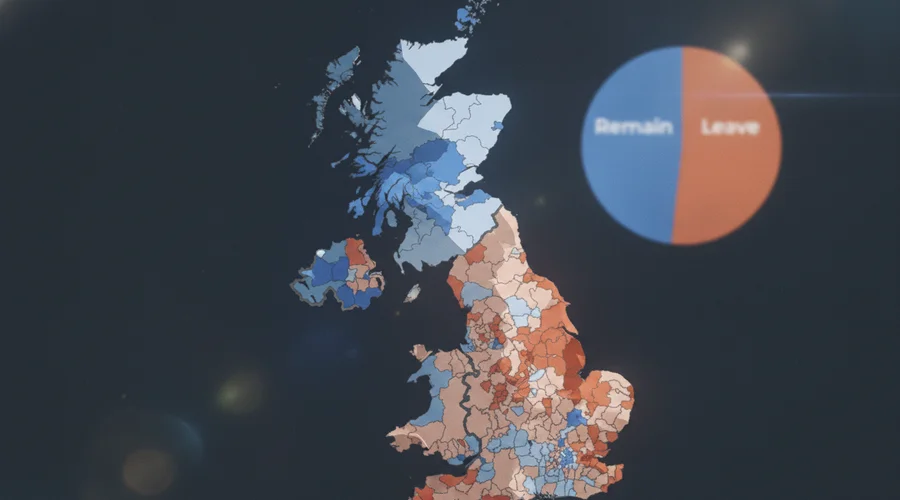
A decade has passed since the United Kingdom’s referendum on European Union membership, a vote that initiated a significant shift in the nation's trajectory. Public sentiment regarding the decision to leave the EU has undergone a notable transformation over these ten years. While 64 percent of Britons supported leaving the bloc on June 23, 2016, a recent YouGov survey, conducted for the referendum's tenth anniversary, indicates a stark reversal. Only 30 percent now believe Brexit was the correct choice, with a substantial 57 percent considering it a mistake. Furthermore, six out of ten respondents judge Brexit to be an outright failure.
The initial arguments that propelled the 'Leave' campaign – centered on sovereignty, economic independence, and reducing bureaucratic burdens – have not materialized into a consensus. Instead, the discourse has often reached a stalemate. Economically, the Bank of England's analysis suggests a significant contraction of the UK economy by 6 percent due to Brexit's effects. This data has solidified a widespread agreement among economists that the anticipated benefits have not materialized, leading to what some commentators have playfully termed 'Bregret'.
The Deepening of Societal Divides
Beyond the economic repercussions, Brexit's most enduring legacy may be its profound impact on British society and political culture. The period since the referendum has seen a reshaping of national discourse, an increased tolerance for extreme viewpoints, and a heightened focus on questions of belonging and exclusion. This societal cost, characterized by a toxic culture of antipathy, is arguably more significant than the economic figures.
Concerns about immigration, particularly regarding people of color, have a long history in Britain. However, the Brexit referendum provided a renewed platform for exclusionary attitudes. By framing the complex issue of EU membership primarily as a debate over border control, pro-Brexit campaigners infused the politics of migration with an intense moral charge. Dr. Tahir Abbas, Director of the Centre on Radicalisation, Inclusion and Social Equity at Aston University, views Brexit as a culmination of decades of euroscepticism within the Conservative Party. Yet, he emphasizes its powerful ability to mobilize public opinion, particularly in amplifying Islamophobia, as exemplified by controversial campaign imagery.
Normalization of Extreme Rhetoric and Policy
The rhetoric that was once confined to the fringes of political debate – such as claims of national 'invasion,' the portrayal of asylum as a 'racket,' or questioning the 'British values' of minority groups – has increasingly moved into the mainstream. Phrases that might once have ended a minister's career are now normalized. This shift in discourse has been accompanied by a corresponding change in policy. Successive governments, seemingly responding to the electoral landscape revealed by Brexit, have adopted increasingly stringent immigration measures.
These policies include offshore processing, threats to withdraw from the European Convention on Human Rights, and schemes to deport asylum seekers to third countries, some of which have been deemed unlawful by courts. Practices previously considered unacceptable – such as indefinite detention of migrants, the criminalization of sea rescue operations, and the conflation of refugees with criminals – have become normalized under the pretext of border control. Slogans like 'Stop the Boats,' initially a Conservative Party campaign message, have been embraced by far-right figures, further embedding divisive language into public consciousness.
From Discourse to Violence
The escalation of toxic public discourse has, in some instances, tragically manifested in real-world violence. A week prior to the referendum, Labour MP Jo Cox was murdered by a man who shouted 'Britain first' and 'This is for Britain.' More recently, riots in Belfast, sparked by a knife attack involving a Sudanese national, saw masked crowds targeting homes and businesses occupied by immigrants. These incidents are not isolated; volunteer monitors had reportedly warned authorities about a 'hit list' of immigrant addresses before the Belfast riots occurred.
While not all far-right and racist politics in Britain are directly attributable to Brexit, the referendum undoubtedly exacerbated the resurgence of hateful ideologies. Nichola Khan, an anthropologist and migration expert at the University of Edinburgh, argues that this has solidified a form of nationalism that threatens post-World War II commitments to public democracy and risks eroding the cherished British value of cultural diversity. The burden of this exclusionary atmosphere is particularly heavy for Britain's Muslim communities, who face discrimination based on both their ethnicity and faith, often targeted by campaigns that question their 'British values.'
The Role of Disinformation in a Polarized Society
Brexit also highlighted the power of information warfare in a divided society. Underprivileged white working-class communities, grappling with austerity and post-industrial decline, often directed their anger solely towards immigration, despite polling data indicating that ethnic minorities largely favored remaining in the EU. Amil Khan, head of Valent, an organization combating disinformation, notes that the 'Leave' campaign's success validated new approaches to communication, demonstrating how technology and data could bypass traditional media and community gatekeepers.
The post-Brexit era saw the rise of a new generation of strategists: younger, more tech-savvy, and less constrained by traditional rules. This also fueled the growth of ancillary services, such as bot farms, which amplify disinformation – a problem that advancements in artificial intelligence could further exacerbate. While groups like Muslims are frequently targeted, the ultimate goal, according to Khan, is control over government and policy influence.
The Path Forward
As the UK continues to grapple with economic challenges, debates about its future alignment with the EU are inevitable. However, these discussions remain complicated by contentious issues of sovereignty and immigration, with a resurgent Reform UK party, led by figures like Nigel Farage, poised to frame any concessions as betrayal. The societal implications of a decade centered on migration as the explanation for all socioeconomic problems are profound and tragic. This trajectory has coarsened public discourse, normalized extremism, and placed non-white individuals and families, particularly British Muslims, in increasing peril. Rectifying this course will require more than just economic recovery; it demands a concerted effort to rebuild trust and foster inclusivity among all citizens.
Source: After a decade, Brexit’s cost to Britain is not only economic
Related Articles
 politics
The Enduring Influence of Meir Kahane on Contemporary Israeli Politics
 politics
A Decade After Brexit: Assessing the UK's Transformation
 politics
NYC Council Member Mamdani Clarifies 'Monsters' Remark Regarding AIPAC
 politics